 how-to
7 Steps to Choose Abstract Wall Art That Fits Your Space
Quick Summary
To choose abstract wall art, start with the room and its purpose, then size the piece to the furniture below it and match its colors. Choose a mood, from calm blues and greens to warm energetic tones, and test the placement with painter's tape before you hang anything.
- Pick a living room statement piece sized to span two-thirds to three-quarters of the sofa's width.
- Pull one dominant color and one accent color from the room's rug, sofa or pillows.
- Map the piece's outline with painter's tape and live with it for a day before buying.
- Aim the center of the artwork at roughly eye level for most adults.
- Check hardware weight ratings and use studs or rated anchors for heavy pieces.
Table of Contents
- Start With the Room and Its Purpose
- How to Choose Wall Art Size for Your Walls
- How to Choose Abstract Art for Living Room Palettes
- Matching Color, Mood and Composition
- Abstract Wall Art Ideas for Different Budgets and Gifts
- How to Arrange Wall Art and Test It Before Hanging
- Your Next Step: Pick a Piece and Preview It at Home
- Frequently Asked Questions
Start With the Room and Its Purpose
Choosing abstract wall art gets easier once you know what the room is for. A living room that hosts guests needs a different piece than a quiet bedroom or a home office where you spend eight hours a day.
Start by asking three simple questions. What do you do in this room? How long do you spend there? What mood do you want to feel when you walk in? Your answers point you toward bold or calm, bright or muted, busy or simple.
- Living rooms: Choose larger, statement pieces that anchor the seating area.
- Bedrooms: Pick softer tones and gentle shapes that help you relax.
- Home offices: Go for simple compositions that do not compete with your focus.
- Entryways: Use smaller works with a pop of color to greet visitors.
At Lux Landscape Art, we see many buyers begin with the room, then move to the artwork. That order saves time and prevents impulse buys that do not fit the space.
How to Choose Wall Art Size for Your Walls
Size is the decision most buyers get wrong, and it is the easiest one to get right with a tape measure. The goal is not to fill the wall; it is to make the artwork feel connected to the furniture below it.
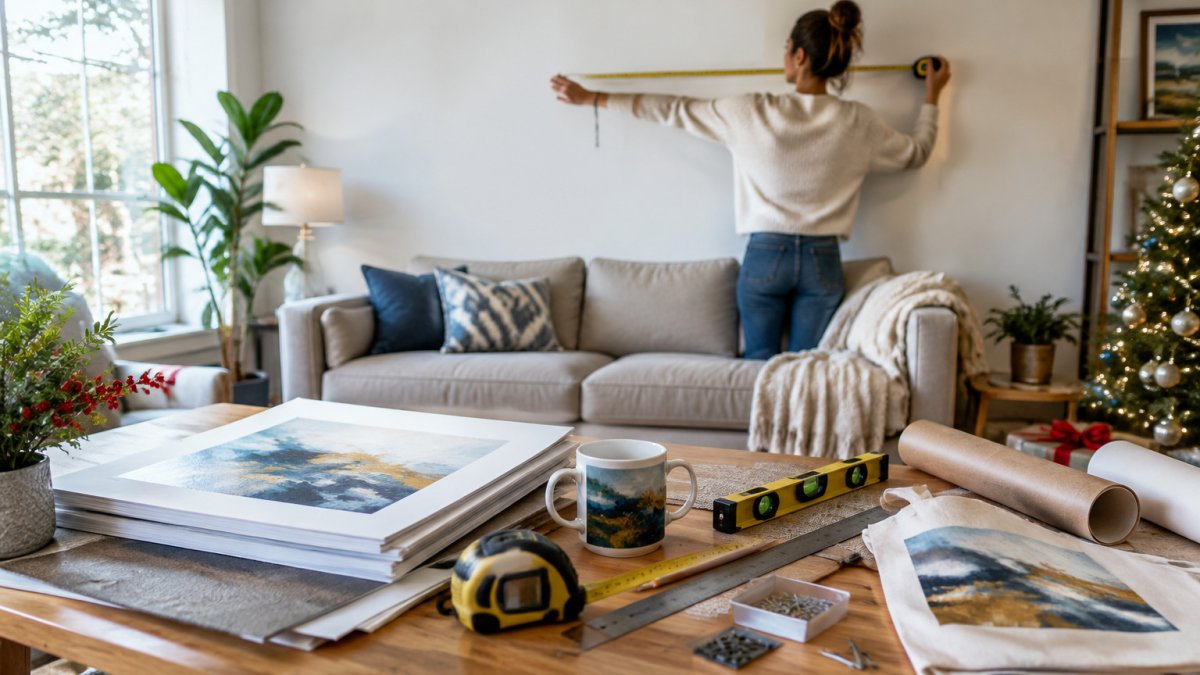
Start with the furniture, not the wall. For a piece hung above a sofa, a bed, or a sideboard, aim for the artwork to span roughly two-thirds to three-quarters of the furniture's width. A single small print floating above a long sofa is a common scale mistake.
Leave breathing room. Leave breathing room on each side of the artwork and between the frame and the furniture below it. Tighter spacing can feel crowded, while wider spacing can feel disconnected.
For a bare wall with no furniture beneath it, work from the wall's own proportions. A larger piece relative to the wall's width tends to read as a focal point, while a smaller piece reads as an accent. Very large walls often look best with a single oversized piece or a grouped arrangement rather than one medium canvas.
Use painter's tape to map the outline on the wall before you buy. Cut tape to the exact dimensions of the piece you are considering, stick it up, and step back across the room. Live with the outline for a day. This one step prevents most returns.
Watch out: hanging art too high is the most common installation error. Aim for the center of the artwork to sit roughly at eye level for most adults. Above furniture, keep the bottom edge close above the sofa or headboard so the piece relates to the furniture instead of floating toward the ceiling.
How to Choose Abstract Art for Living Room Palettes
Your living room already has colors, whether you planned them or not. Look at your rug, sofa, throw pillows and curtains. Pull one or two colors from those items and look for abstract art that repeats them.
This approach creates harmony without making the room feel matched too perfectly. Abstract pieces are great for this because their shapes and textures often carry several colors at once.
- Choose one dominant color that already appears in the room.
- Add one accent color from a pillow or vase.
- Keep neutrals like cream, gray or charcoal as your base.
Matching Color, Mood and Composition
Color sets the mood, and composition sets the energy. Soft blues and greens tend to feel calm. Warm reds, oranges and yellows bring energy into a room. Large areas of open space, called negative space, give a piece room to breathe.
Composition is how the shapes sit on the canvas. Balanced pieces feel settled. Pieces with diagonal lines or off-center shapes feel more dynamic. Choose the one that matches how you want your room to feel.
Think about your personal taste, too. The best piece is the one you enjoy looking at every day, not the one that follows a trend.
Abstract Wall Art Ideas for Different Budgets and Gifts
Abstract wall art comes in many price ranges, and you do not need to spend a lot to get a strong look. Smaller prints and works on paper can be a great starting point for a first apartment or a gift for a friend.
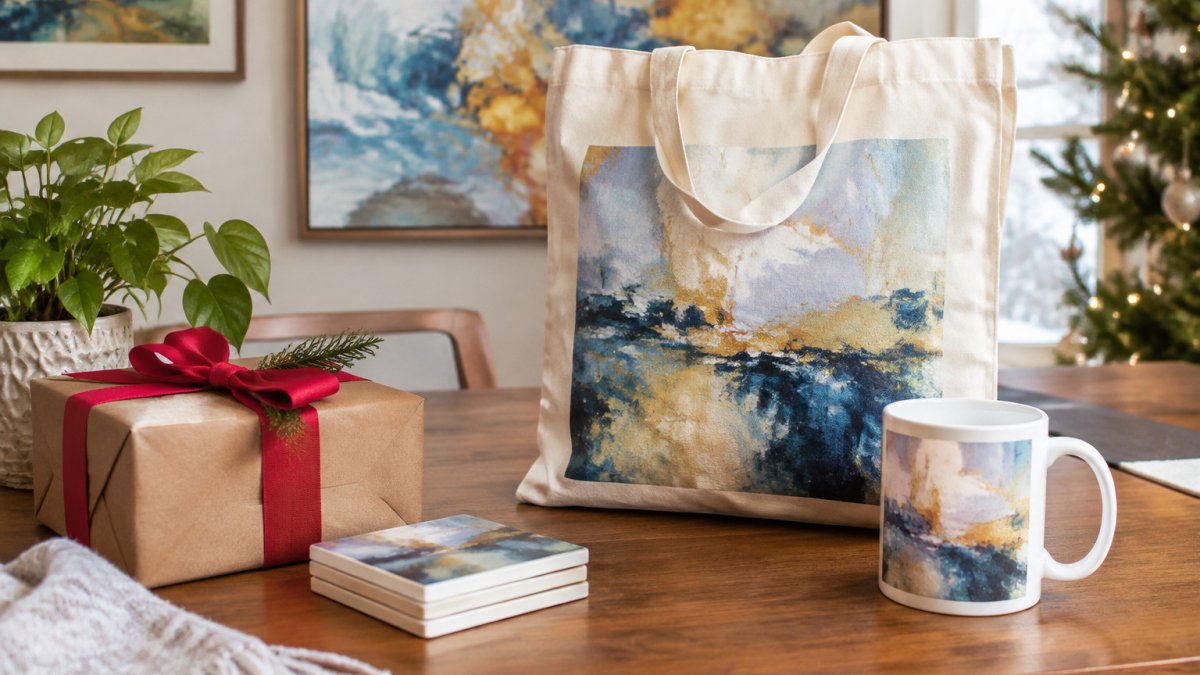
Holiday shopping on a budget is easier when you think about gifts that carry a little personality. Our fine art prints also appear on mugs, tote bags and similar everyday items. You can browse unique gift ideas for art lovers across these everyday pieces. These make thoughtful, affordable gifts for art lovers who want beauty in daily life.
- Small budget: Mugs and totes featuring abstract designs.
- Mid-range: Smaller framed prints for a bedroom or hallway.
- Larger budget: A statement piece for a living room focal point.
Pricing depends on size, format and delivery, so check the current options on our website for exact costs.
How to Arrange Wall Art and Test It Before Hanging
Before you drill, test. Lay the piece on the floor below its planned spot and view it from across the room, then tape a paper template to the wall and check it from sitting height and standing height. A piece that looks right on the floor can feel too small once it is up, so compare the template against the furniture below it.
Lighting changes how abstract art reads. Natural light from a window will make colors look different across the day, and warmer under lamps at night. Glossy finishes and glass frames can throw glare from windows or overhead lights, while matte canvas and paper absorb light and show color more evenly. If a wall faces a bright window, a matte finish usually holds up better; if the wall is dim, a lighter piece with more contrast will stay visible after dark. Test your candidate under your regular evening lamps, not just daylight.
Plan the arrangement on the floor first. For a group of works, keep spacing consistent, usually about 2 to 3 inches between frames, and treat the whole group as one shape. Center the group on the furniture below it, not on the wall itself. For a gallery wall, start from the center piece and build outward so the group stays balanced.
Match hardware to the wall and the weight. Lighter framed prints can often hang on drywall anchors, while heavy canvases and large frames are better supported by studs or rated anchors. A stud finder and a level are the two tools that prevent crooked, sagging art. For renters, adhesive strips rated for the piece's weight can avoid holes, and a leaning shelf or picture ledge can display prints with minimal wall contact.
Watch out: hanging a heavy piece on a single drywall anchor without checking the weight rating is a common cause of wall damage and dropped art. Check the hardware rating against the piece's weight before you commit.
Before you hang anything, a few quick checks help you avoid the most common placement and mounting mistakes.
| Step | What to do | Note |
|---|---|---|
| Test on the floor | Lay the piece below its planned spot | View it from across the room |
| Paper template | Tape a paper template to the wall | Check from sitting and standing height |
| Group spacing | Keep frames a consistent gap | About 2 to 3 inches apart |
| Check the hardware | Match anchors to the wall and weight | Use studs or rated anchors for heavy pieces |
| Lighting test | View under evening lamps | Matte finishes reduce glare |
Your Next Step: Pick a Piece and Preview It at Home
You now have a clear process: start with the room, size the piece, match the palette, choose the mood, and test before hanging. Each step narrows your choices until one piece feels right.
Ready to see how a piece looks in your own space? Explore our abstract collection and use augmented reality to preview artwork on your wall before you buy. Visit Lux Landscape Art to browse fine art pieces and merchandise, including mugs and tote bags, made for gifting and everyday enjoyment.
Frequently Asked Questions
How do I choose the right size abstract art for a wall?
Measure the furniture below the wall first. A common approach is to make the artwork about two-thirds the width of a sofa or console, leaving some breathing room on each side. For a single piece above a sofa, aim to hang it so the bottom edge sits a comfortable distance above the backrest. Tape a paper template of the artwork's dimensions to the wall and look at it from the seating position for a day before committing.
How do I choose abstract art that matches my room?
Start with the colours already in the room, then pick one or two of them to repeat in the artwork. Neutral rooms suit abstract pieces with a single accent colour, while busier rooms often look better with calmer compositions that have open space. Think about the mood you want: soft organic shapes feel relaxed, while bold geometric forms add energy. Using a photo of your room on your phone and previewing the piece with augmented reality can help you judge whether the colours and scale work together before you buy.
Where should abstract wall art be placed in a living room?
Place the piece where it can be seen from the main seating area, usually on the longest uninterrupted wall. Centre it on the sofa or on a console table if one is present. Avoid hanging it where a doorway, window or light switch will compete with it. If you are building a small grouping, keep the spacing between frames consistent, so the group reads as one unit.
Can I buy abstract art as a gift on a budget?
Yes. Smaller prints and everyday items printed with abstract designs, such as tote bags and mugs, make practical, affordable gifts that still feel personal. Lux Landscape Art sells merchandise printed with its artwork, which lets you share a favourite design without committing to an original piece. Check the current product range on the website for options before the holidays.