 how-to
How to Choose Art for a Small Apartment in 2026
Quick Summary
To learn how to choose art for a small apartment, start by measuring your wall and the furniture around it, then pick a piece that fills about two-thirds of the space above your sofa or console. Use painter's tape to preview the size before you buy. One larger piece often works better than many small ones.
- Measure the wall width and height, and note any doors, windows, or light switches.
- Let art fill about two-thirds of the wall above a sofa or console.
- Use painter's tape to outline a piece and live with it for a few days.
- Choose one larger piece for a tiny living room to keep the space calm.
- Pick one or two colors from your furniture and echo them in the artwork.
Table of Contents
- Start With Your Wall: Measuring Before You Buy
- Art Size Guide for Small Spaces
- Large Art vs Gallery Wall for Small Rooms
- How to Hang Art in a Small Apartment
- Matching Colors and Style to Your Furniture
- Visualize Wall Art in Your Room Before Buying
- Budget-Friendly Gift Ideas: Art Prints on Mugs and Totes
- Your Next Step: Shop Lux Landscape Art for Your Space
- Frequently Asked Questions
Start With Your Wall: Measuring Before You Buy
Last Updated: November 2, 2026
Learning how to choose art for a small apartment in 2026 starts with one question: how much wall do you actually have? Before you fall in love with a print, measure the wall first. Explore more practical strategies for curating art in small apartments for ideas that fit limited space.
Here's how to start:
- Measure the width and height of the wall you plan to use.
- Note any doors, windows, or light switches that will crowd the space.
- Check the height of your ceiling, since tall pieces can make a room feel bigger.
- Mark the spot with painter's tape to see how the space looks.
Painter's tape is the easiest test. Tape out the outline of a piece on the wall, then live with it for a few days. You will quickly see whether it feels right.
Watch out: Measuring only the wall and skipping the furniture is a common mistake. A piece that looks perfect above an empty wall can feel too big once the sofa is in place.
Art Size Guide for Small Spaces
A good rule of thumb is to let the art fill about two-thirds of the wall above a sofa or console. In a small apartment, that often means choosing a medium piece rather than a large one.
Smaller rooms usually work best with:
- Narrow walls: Vertical prints, which draw the eye upward.
- Short walls: Horizontal prints that stretch across the space without crowding it.
- Tight corners: Compact prints, like small landscape or abstract pieces.
Vertical art is especially useful when ceilings feel low or the room feels closed in. A tall landscape can make the whole space feel taller.
Large Art vs Gallery Wall for Small Rooms
You have two main choices: one large piece or a grouped gallery wall. Each works well in a small room, but for different reasons, and the right pick often depends on the room, your lease, and your budget.
One large piece keeps things calm and simple. It creates a clear focal point and leaves plenty of negative space around it. This is often the better choice for a tiny living room or a bedroom where you want the wall to feel restful rather than busy.
A gallery wall lets you mix sizes and styles. It is a good way to display several smaller prints you already love, and it can fill an awkward wall, above a low console, beside a doorway, or along a narrow hallway, without one statement piece.
Here is how the choice tends to break down by compact layout:
- Tiny living room: One large piece above the sofa. Fewer objects read as calmer in a small footprint.
- Narrow hallway: A vertical gallery of three or four small prints stacked in a column, which uses height instead of width.
- Combined living-dining space: One large anchor piece in the living zone and a smaller grouped cluster in the dining zone, so each area has its own focal point.
- Bedroom: One medium piece above the bed, or a symmetrical pair, keeps the room restful.
- Kitchen: A small cluster of wipes-clean prints near the table, kept away from the stove and sink.
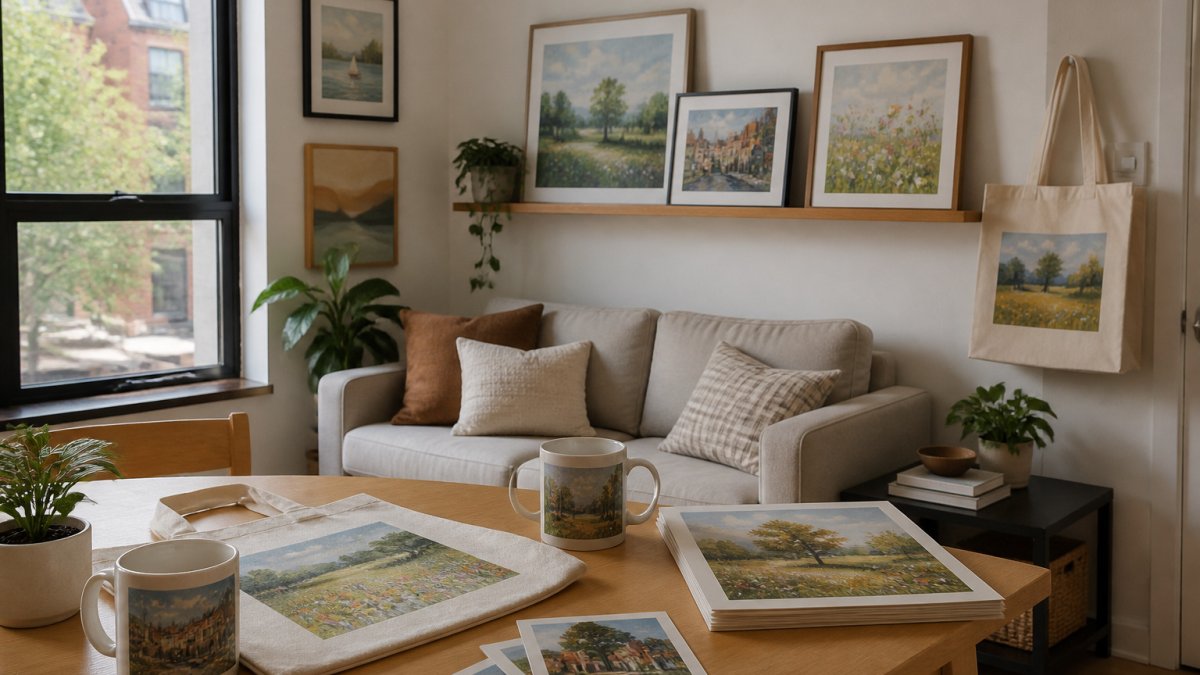
Rental tip: If you rent, a gallery wall means more holes, or more removable strips. A single large piece is often the lower-risk choice because it needs one hanging point instead of six. If you want the gallery look without the commitment, lean a few framed prints on a shelf or console and skip the wall entirely.
Budget tip: A gallery wall can be built gradually, start with two prints you love and add over time. A single large piece is usually a one-time decision, so measure twice before you commit.
Our advice: start with one larger piece in a small room, then add a grouped wall later if you want more personality.
How to Hang Art in a Small Apartment
Hanging art is easier than most people think. Follow these simple steps:
- Find the center line of your piece and mark the wall at eye level, about 57 to 60 inches from the floor.
- Hang the art so it sits about 6 to 10 inches above your sofa or table.
- Use picture hanging strips or removable hooks if you rent. They protect your walls and come off cleanly.
- Check that the piece is level before you step back.
If you are renting, check your lease before you put holes in the wall. Removable options are a safe choice in a small space.
Matching Colors and Style to Your Furniture
Art should work with what you already own. In a small apartment, the easiest way to pull a room together is to pick one or two colors from your furniture and find them in the artwork, then repeat that color once more somewhere else in the room, such as a cushion, a rug, or a ceramic, so the piece feels intentional rather than dropped in.
A simple method most stylists use:
- Pull a palette from the room. Look at your sofa, rug, and largest piece of furniture. Note the two or three dominant colors.
- Choose art that echoes one of them. You do not need an exact match, a similar tone is enough.
- Add one contrast. A neutral room benefits from a bolder print; a colorful room benefits from a quieter, restrained piece.
- Repeat the accent once. A second small appearance of the same color ties the wall to the room.
Here is how common furniture palettes tend to pair:
- Neutral furniture (cream, gray, beige): Pair it with bold abstracts or a black-and-white photography print for contrast. A single saturated landscape also works well as the room's one strong color.
- Warm wood tones: Choose earthy landscapes or vintage-inspired prints that echo the warmth. Avoid cool blue-grays that fight the wood.
- Restrained palettes: Pick soft abstracts with broad shapes instead of dense, busy patterns. In a small room, fewer shapes read as more spacious.
- Dark furniture: Lighter prints, pale landscapes, line art, soft abstracts, keep the wall from feeling heavy.
Style and negative space: In a small apartment, the composition of the artwork matters as much as its color. Prints with generous negative space, a single horizon line, a lone figure, a broad wash of color, make a room feel larger than dense, edge-to-edge patterns. If you love busy art, keep it to one piece and let the surrounding wall stay quiet.
Lighting and glare: Where you hang a piece changes how its colors read. A print on a wall that gets direct afternoon sun can fade over time and will often show glare from a lamp or window.
Cohesive collecting: You do not have to buy everything at once. A consistent thread, the same frame color, a shared palette, or a single subject like landscapes, lets you add pieces over time without the wall feeling busy. This is also a budget-friendly way to build a display: start with one piece that anchors the palette, then add smaller prints that share its colors.
Black-and-white photography and line art work well in almost any room, which makes them a safe starting point. If you are giving art as a holiday gift and do not know the recipient's palette, a fine art print on a mug or tote in a neutral or landscape design is an easy choice that fits almost any home.
Visualize Wall Art in Your Room Before Buying
Seeing a print on your own wall is the best way to be sure. Follow this step-by-step guide to previewing art on your walls before you buy. Lux Landscape Art supports augmented reality previews, so you can see how a piece will look in your space before you buy.
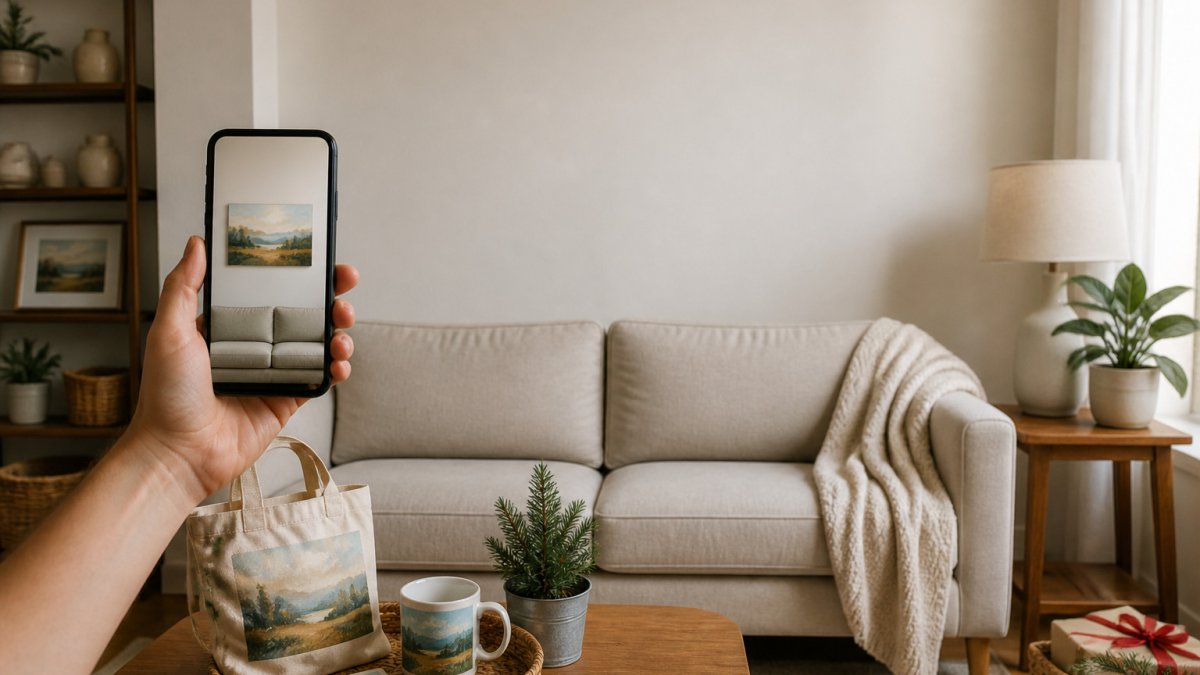
To get the most from a preview, try these steps:
- Open the preview in the room where the art will hang.
- Check the piece at different times of day, since light changes how colors look.
- Compare two or three options side by side.
- Think about how the piece fits with your rug, sofa, and lamps.
Budget-Friendly Gift Ideas: Art Prints on Mugs and Totes
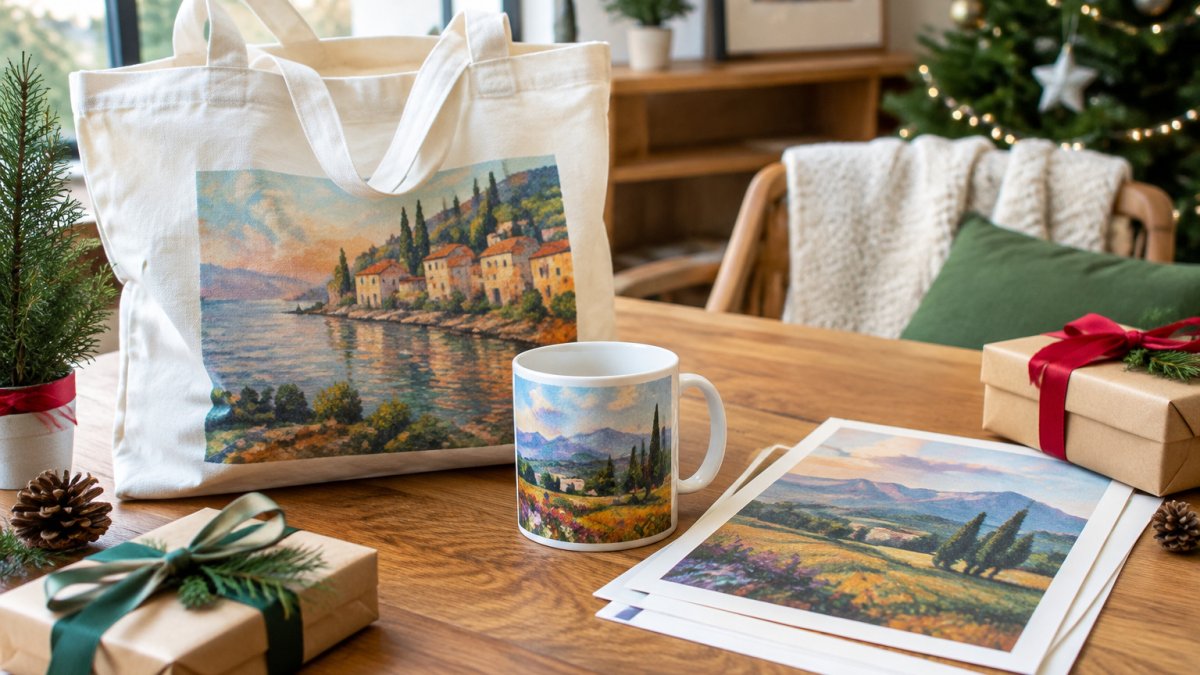
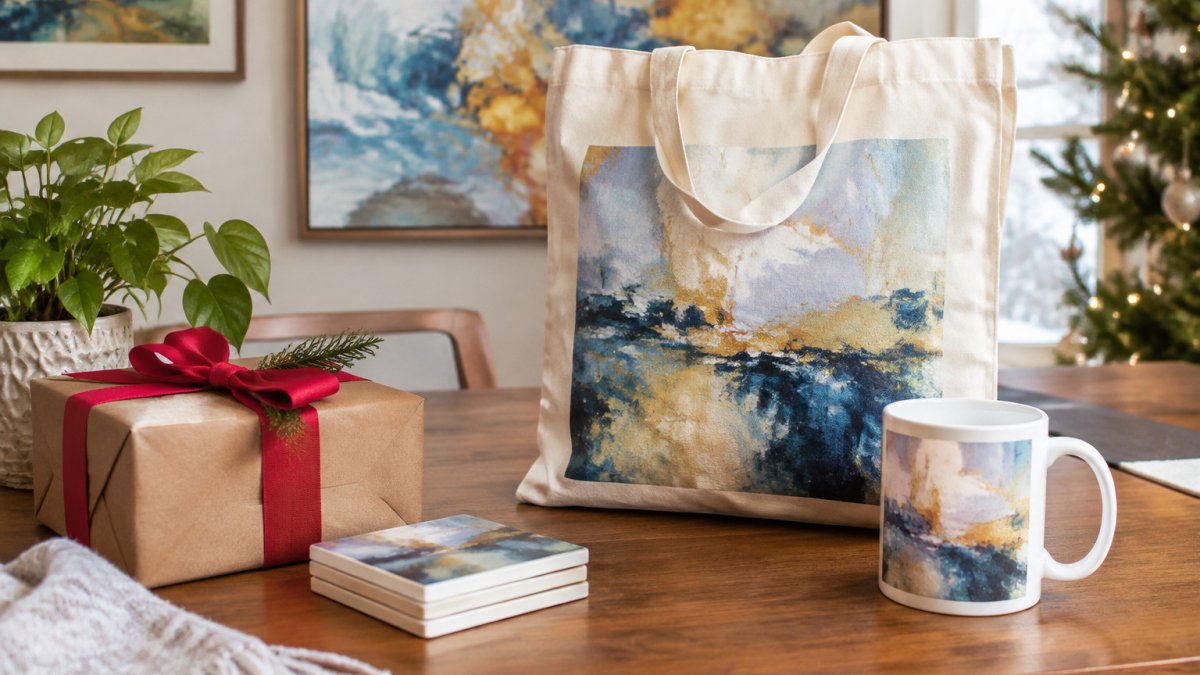
Lux Landscape Art's merchandise, including mugs and tote bags printed with its artwork, makes thoughtful gifts for the art lover in your life, or for someone who wants a little beauty in their daily routine. See specific landscape art mug designs as gift options to find the right one.
Good options include:
- Coffee mugs: A landscape print on a mug turns a morning coffee into a small moment of art.
- Tote bags: A tote with an abstract or town life design is practical and easy to carry.
- Gift combinations: Pair a mug with a tote for a simple, personal present.
For current prices and any bundle options, check the Lux Landscape Art website, since pricing depends on the item and quantity. You can also browse curated fine art gift collections for the holidays to find budget-conscious options.
Here is a quick look at the gift options the article describes for art lovers.
| Gift | Why it works | Note |
|---|---|---|
| Coffee mug | Turns morning coffee into a small moment of art | Landscape print design |
| Tote bag | Practical and easy to carry | Abstract or town life design |
| Mug and tote pair | A simple, personal present | Combine both items |
Your Next Step: Shop Lux Landscape Art for Your Space
Knowing how to choose art for a small apartment is about measuring carefully, picking the right size, and checking how a piece looks in your own room. Start with your wall, use the preview tools, and choose pieces that feel right.
Ready to find something you love? Sign up with Lux Landscape Art to explore original landscape and abstract pieces, plus our fine art prints on mugs and totes for gifts that feel special.
Frequently Asked Questions
How do I choose the right size art for a small apartment?
Measure the wall first and aim for artwork that fills roughly two-thirds of the width of the furniture or wall it hangs above. Leave clear space on either side so the piece does not feel cramped. In small rooms, a single well-sized print often reads as more intentional than several small pieces scattered across the wall. Measure twice, mark the outline with painter's tape, and step back to check the proportion before committing to a purchase or a hole in the wall.
Should I use one large piece of art or a gallery wall in a small apartment?
A single large piece usually works better in a small room because it creates one clear focal point and avoids visual clutter. A gallery wall can still suit a compact space if the pieces share a color palette or frame style and the grouping stays within one defined area. Choose one large print for narrow rooms or low ceilings, and consider a small grouping only on a wall with generous open space around it.
How high should art be hung in a small apartment?
A common guideline is to hang the center of the artwork at roughly eye level, around 150 to 160 cm from the floor, adjusted for the room's ceiling height. When art hangs above furniture, leave a gap of about 15 to 25 cm between the bottom of the frame and the top of the sofa or console. Vertical pieces can make a low ceiling feel taller when they are placed centrally on a narrow wall.
How do I preview artwork on my wall before buying it?
Lux Landscape Art offers augmented reality previews that let you see how a piece will look in your own room before you purchase. Use the preview to see how a piece will look in your room. Confirm the preview against your measured wall dimensions, and contact the gallery for current details on sizes and availability.