 how-to
How Do You Choose Original Art for Your Home?
Quick Summary
Choose original art by starting with the room rather than the artwork. Measure the wall, note the light and the furniture, and decide the mood you want. Then pick a piece sized to about two-thirds to three-quarters of the furniture below it, and confirm it is a genuine original with documentation before you buy.
- Measure the wall width and height before you shop
- Aim for artwork covering about two-thirds to three-quarters of the furniture below it
- Use a 1:2 or 1:3 ratio of one dominant work to supporting pieces
- Keep about 5 to 8 centimeters between frames in a group
- Ask the seller for documentation of the artist, medium, year and originality
Table of Contents
- Start With the Room, Not the Artwork
- How to Choose Art for a Large Wall
- How to Pick Art That Goes Together
- Confirm the Piece Is Genuinely Original
- Visualize Art on Your Wall Before You Buy
- How to Display Art in Your Home
- Choosing Your First Piece This Season
- Frequently Asked Questions
Start With the Room, Not the Artwork
Choosing original art gets easier when you begin with the space instead of the painting. Look at the wall, the light and the furniture first. Then decide what the room needs: calm, energy, warmth or a focal point.
Measure the wall before you shop. Note the width, the height and where the sofa, bed or desk sits.
Think about how you use the room, too. A busy kitchen needs art that holds up to steam and daily life. A bedroom can take quieter, moodier pieces.
- Measure the wall width and height
- Note the main light source and its direction
- List the colors already in the room
- Decide the mood you want: calm, lively or cozy
How to Choose Art for a Large Wall
A large wall calls for one bold piece or a small group of related pieces. If your space is tight, this guide on choosing art for a small apartment covers similar sizing decisions. A single large canvas often works best above a sofa or bed. Aim for artwork that covers about two-thirds to three-quarters of the furniture below it.
If your budget or space allows only a modest piece, a tight grouping can fill the wall. Keep the spacing even, about 5 to 8 centimeters between frames, so the group reads as one unit.
Landscape and abstract originals can work well on large walls, where strong color fields hold attention from across the room.
How to Pick Art That Goes Together
When you buy several pieces over time, look for a common thread. For guidance on coordinating your palette, see how to match art colors to room decor. It can be a shared color, a similar brush style or a matching frame finish. You do not need everything to match exactly.
A practical method is to build a small "color bridge" between pieces. Pull one or two colors from the room and let them repeat across your art. For example, if your sofa is a warm oatmeal and your rug has rust tones, choose one piece with a rust accent and another with a similar warm neutral. The eye reads the repetition as intentional even when the subjects differ.
Mix one bold piece with quieter ones so the wall has a clear focal point. A common pattern among interior stylists is to follow a 1:2 or 1:3 ratio: one dominant work and two or three supporting pieces. This keeps the grouping from feeling flat.
Watch out: buying too many similar sizes can make a wall feel static. Vary the scale a little so the eye has somewhere to rest. A small piece next to a large one creates rhythm; five pieces of the same size create a grid that can feel like a spreadsheet.
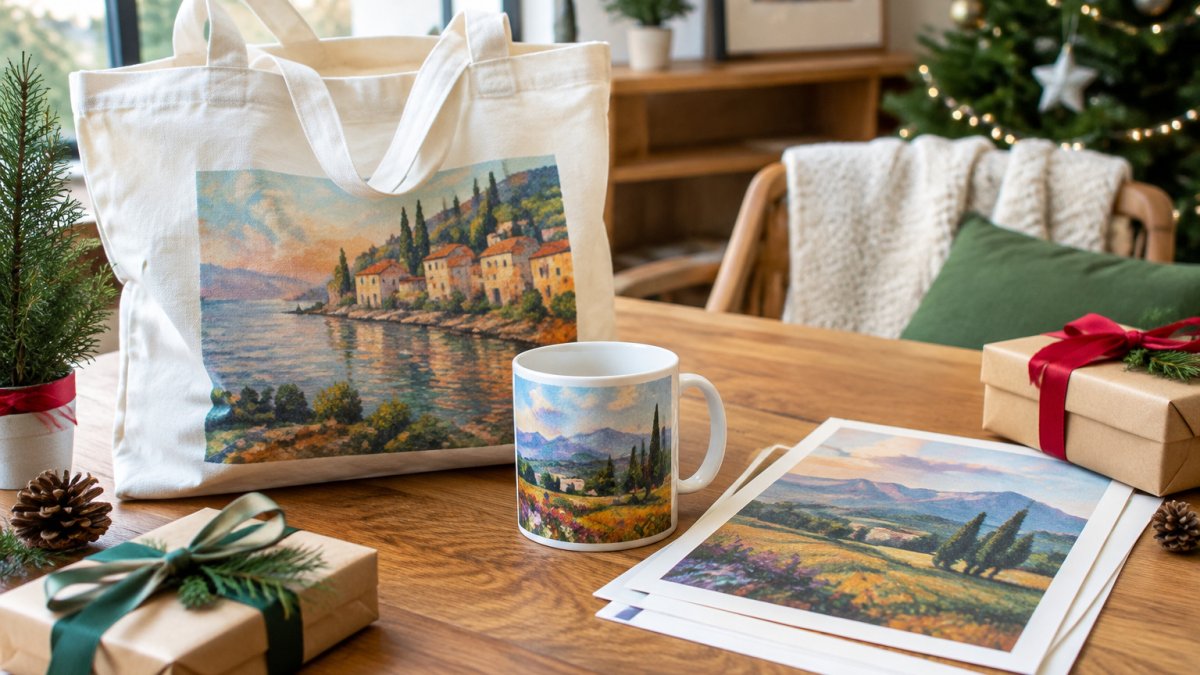
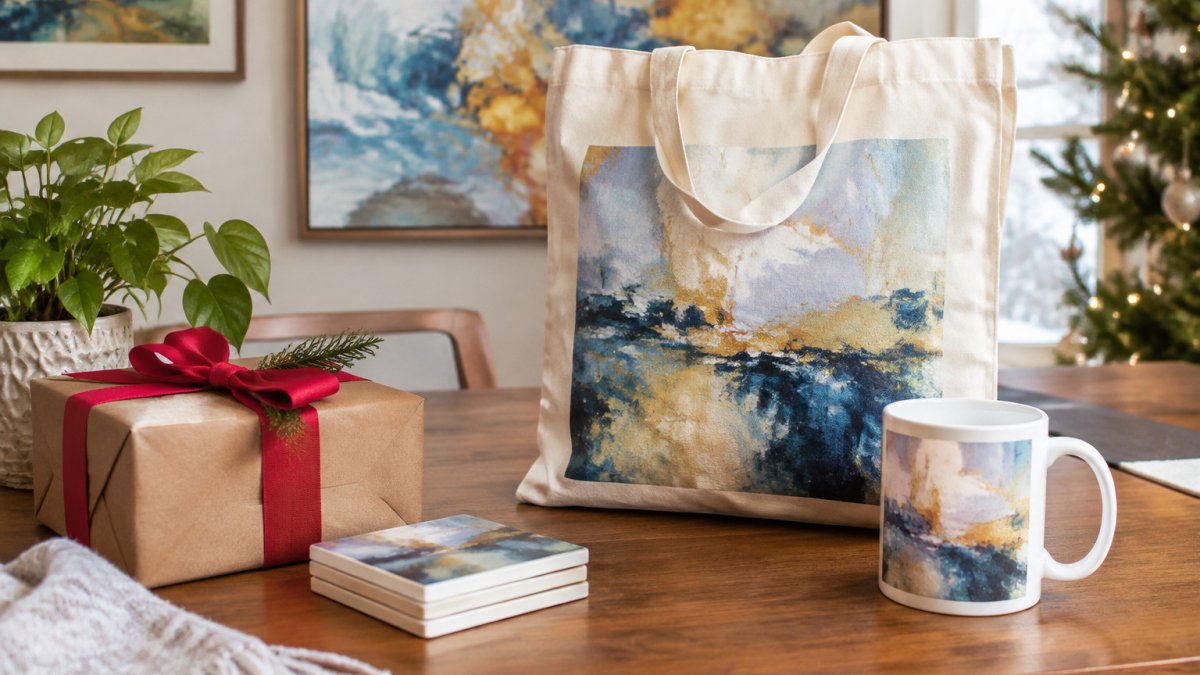
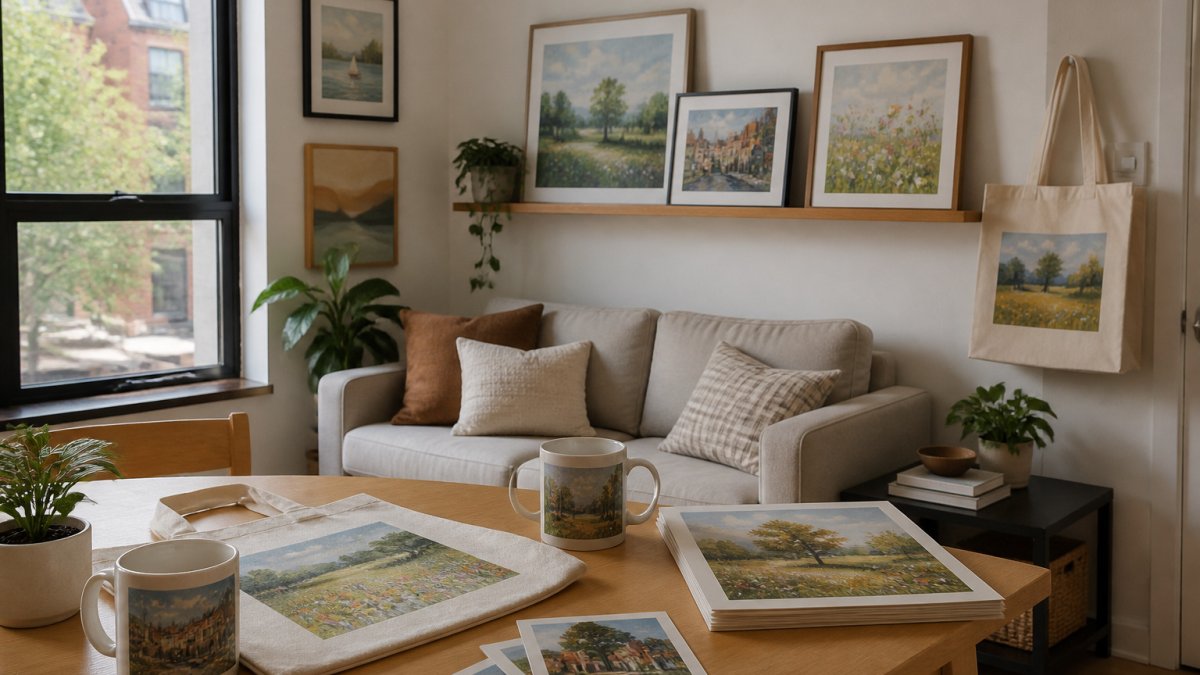
If you are shopping for holiday gifts on a budget, this principle works for fine art prints on totes, mugs and similar items too. A tote printed with a detail from a larger landscape can echo the colors of a framed print in the same room, letting someone enjoy the artwork in a printed form. When you give a mug or a puzzle as a gift, the same color-bridge idea helps the recipient place it in their home: choose a print whose palette matches something they already own, and the gift feels considered rather than random.
For a gallery wall, lay the pieces on the floor first and photograph them with your phone. The photo flattens the arrangement the way your eye will see it from across the room, making mismatched scales and clashing colors easier to spot before you commit to nails.
The article's guidance on pairing pieces comes down to a few concrete ratios and checks:
| Guideline | Recommendation | Why it matters |
|---|---|---|
| Focal-point ratio | 1 dominant work to 2-3 supporting pieces | Keeps the grouping from feeling flat |
| Frame spacing in a group | About 5 to 8 centimeters | Makes the group read as one unit |
| Work size over furniture | About two-thirds to three-quarters of furniture width | Balances the wall with the piece below |
| Shared thread | One or two colors repeated across pieces | Reads as intentional even with different subjects |
| Mixed sizes | Vary scale slightly | Creates rhythm instead of a static grid |
| Layout test | Lay pieces on the floor and photograph them | Shows how the arrangement will look from across the room |
Confirm the Piece Is Genuinely Original
Before you buy, check that the piece is an original and not a print or reproduction. This process for verifying an artwork's authenticity lays out the checks step by step. Look for a clear statement of the medium, the artist and the date on the listing. Ask the seller to confirm the work is one-of-a-kind.
A practical way to verify a piece is to ask the seller for clear documentation: the artist, the title, the year, the medium and whether the work is an original or a reproduction. If any of these details are missing, ask why before you pay.
For limited-edition prints, check the edition number and the artist's signature. A print listed as "limited edition" should state the total number in the edition (for example, "edition of 50") and show the specific number of your piece. Open-edition prints are reproductions made without a fixed limit; they can be beautiful, but they are not originals and should be priced and described accordingly.
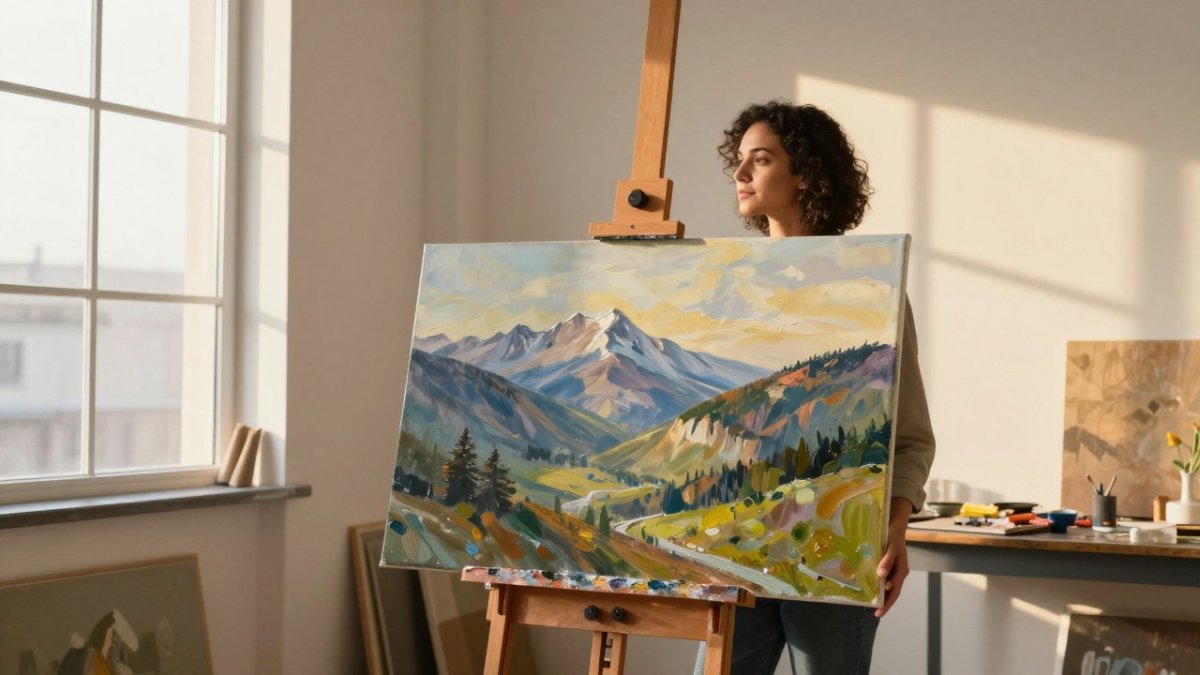
Original works by artist Ginger Lux are sold through Lux Landscape Art, a verified trusted art seller. Ask for documentation of the piece before you pay, and keep it with your records. If you are buying a gift, request a copy of the certificate so the recipient has the full history of the work.
Note that prints and merchandise such as mugs, totes and puzzles are made from artwork, so their listings should say so clearly. A fine art print on a tote is a reproduction of an original work, not the original itself. When you shop for holiday gifts, a tote or mug printed with a Ginger Lux landscape lets someone enjoy the artwork, and the listing should state plainly that it is a printed reproduction.
Watch out: a seller who cannot or will not provide basic documentation is a risk, no matter how good the photos look. A common pattern among first-time buyers is to fall in love with an image and skip the paperwork; asking for the certificate and provenance before payment protects you and gives you a record if you later resell or insure the piece.
Visualize Art on Your Wall Before You Buy
Seeing a piece in your own room helps you judge size and color better than a photo alone. Our guide to visualizing art in your home before buying explains how to test placement first. Our augmented reality preview lets you place a work on your wall with your phone, so you can check scale and color before you commit.
Take a few steps back and look at the preview from where you sit. Check it in both daytime and evening light if your room changes a lot.
How to Display Art in Your Home
Hang art with the center of the piece at about eye level, roughly 150 to 160 centimeters from the floor. Over furniture, leave a gap of about 15 to 25 centimeters between the sofa top and the frame bottom.
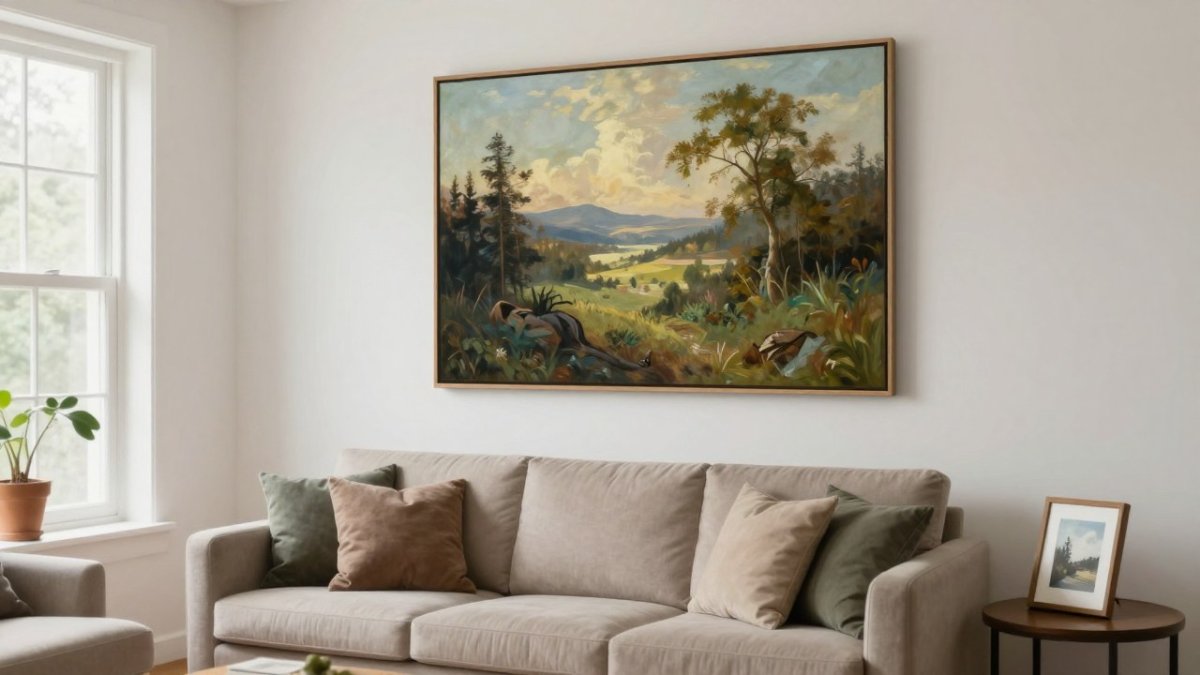
Keep frames and hardware clean and check hanging wire tension before you hang heavy pieces. Rotate smaller works through different rooms to keep your display fresh.
Choosing Your First Piece This Season
Start with one piece you love and that fits your space. Set a budget first, then shop within it. Holiday shopping can also be a good time to find a gift: a print on a tote, a mug or a puzzle lets someone enjoy the artwork in a printed form.
Ready to explore? Browse our collection, use the augmented reality preview on your own wall and sign up for exclusive discounts and special promotions.
BUTTON: Explore the Collection CARD_TITLE: Find art that fits your home CARD_TEXT: Browse original landscapes and gift-ready prints from Lux Landscape Art.
Frequently Asked Questions
How do I choose the right size artwork for a wall?
Start by measuring the wall space and the furniture beneath it. A piece that fills roughly two-thirds to three-quarters of the furniture width usually looks balanced above a sofa or console. For a bare wall, sketch the dimensions on paper or tape the outline on the wall to test scale before committing. Larger, bolder pieces work well as focal points, while smaller works suit corridors or groupings. If you are unsure, ask the seller about dimensions and how the piece will read at your intended distance.
How do I pick artwork that goes together?
Look for one shared thread: a repeated color from your room, a common palette, or a consistent mood. Pieces do not need matching frames or identical styles to feel related. Mixing a landscape with an abstract work can work well when both draw from the same tones. Begin with one anchor piece you love, then add works that echo its colors or energy. Preview combinations on your wall before hanging so you can judge how they sit together.
How can I tell whether a piece is an original and not a print?
Ask the seller for documentation that names the artist, the title, the year, and the medium, and confirm that the work is signed or otherwise identified by the artist. Check whether the listing describes the piece as a one-of-a-kind work rather than a reproduction, and whether it includes a certificate of authenticity. Original paintings show visible brushwork or texture that prints do not replicate. If any detail is unclear, request clarification before purchasing.