 how-to
Fine Art for Living Room: A 2026 Guide
Table of Contents
- Understanding Fine Art for Your Living Room
- Choosing Large Wall Art for Living Room Spaces
- Art Above Sofa: Placement and Design Strategy
- How to Arrange Wall Art in a Living Room
- Living Room Art Ideas: From Abstract to Landscape
- Visualizing Fine Art Before You Buy
- Fine Art Prints, Canvas, and Framing Options
- Budget-Friendly Fine Art: Prints and Merchandise
- Frequently Asked Questions
Last Updated: October 12, 2026
Understanding Fine Art for Your Living Room
Fine art for living room spaces transforms how a home feels. Whether you're drawn to abstract compositions, serene landscapes, or bold contemporary pieces, the right artwork creates a focal point that ties your space together.
Choosing fine art can feel overwhelming, balancing aesthetics, budget, taste, wall space, and lighting. This guide covers selecting pieces that match your style, arranging them, and visualizing them before you buy.
Choosing Large Wall Art for Living Room Spaces
Large wall art anchors a living room, setting the mood and shaping how people experience the space. The challenge is finding the right scale without overwhelming it.
Finding the Right Scale and Proportions
Artwork scale should relate to your wall size and furniture. A small print on a vast wall looks lost; an oversized canvas in a compact room feels claustrophobic. The sweet spot feels intentional, neither timid nor aggressive.
A practical approach: measure your wall space and consider the furniture below it. If you're hanging art above a sofa, the artwork should be roughly 50-75% of the sofa's width. This creates visual balance without dwarfing the furniture or disappearing into the background.
Position the center of your artwork at eye level when standing, typically 57-60 inches from the floor, so it engages viewers naturally.
Selecting Styles That Complement Your Space
Your living room's style influences which fine art works best. A minimalist space suits simple abstracts or limited-palette photography; a maximalist room can handle bold, complex pieces or mixed-media work.
Neutral walls give you freedom to introduce color through artwork. Colorful walls work best with art that echoes or complements those hues rather than competing.
Mood matters as much as aesthetics. Calming landscapes promote relaxation, dynamic abstracts energize a social space, and figurative work adds intimacy. Think about how you want to feel in that room.
Art Above Sofa: Placement and Design Strategy
Art above a sofa is the most impactful placement in a living room, framing how people experience the seating area.
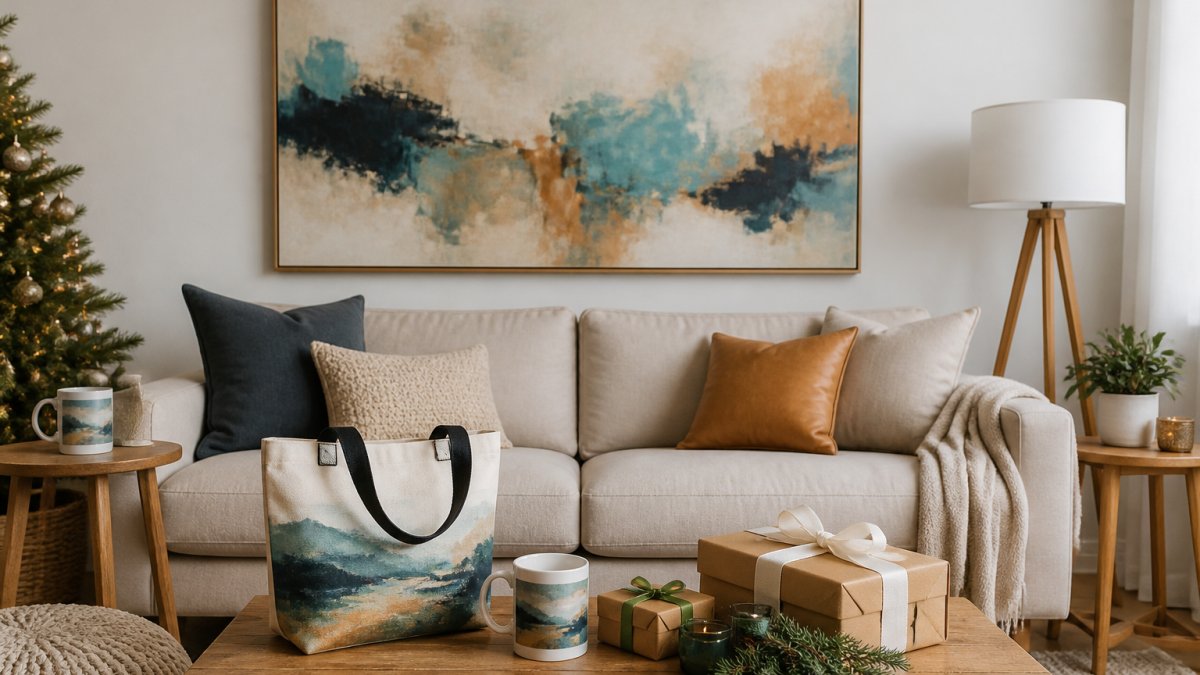
Center the artwork horizontally and vertically relative to the sofa. Measure the sofa width and align the art's center point, then leave 8-12 inches between the top of the sofa back and the bottom edge of the artwork so it doesn't feel cramped.
Choose a piece that spans 60-75% of your sofa's width. Too small looks like an afterthought; too large dominates the room.
A heavy, dark sofa can handle bold, complex artwork; a light, minimal sofa pairs better with subtle, refined pieces. Artwork and furniture should feel like they belong together.
How to Arrange Wall Art in a Living Room
Arranging multiple pieces requires intentionality. Thoughtful arrangement tells a story and creates visual rhythm.
Gallery Wall Layouts and Spacing
A gallery wall works when pieces relate through color, theme, medium, or style. The most common mistake is spacing pieces too far apart; they should feel connected, not isolated.
A grid layout feels organized and modern, an asymmetrical layout feels curated and personal, and salon-style arrangements feel eclectic and artistic.
Spacing between pieces typically ranges from 2-4 inches. Tighter spacing creates cohesion, wider spacing emphasizes individual pieces, and consistent spacing looks intentional.
Start by laying pieces on the floor in your desired arrangement. Photograph it. Then use painter's tape on the wall to map out positions before hanging anything. This step prevents costly mistakes and lets you adjust spacing before committing.
Balancing Color, Tone, and Visual Weight
Visual weight is how much attention a piece commands. A dark, saturated, large, or complex piece feels heavier than a light, muted, small, or simple one.
Balance doesn't mean symmetry. Distribute visual weight so no area feels overloaded, balancing a large, bold piece with several smaller, lighter ones.
Repeating colors unifies the space, contrasting colors create energy, and complementary colors create dynamic tension that feels intentional.
Pieces with similar tones feel cohesive; mixed tones add interest but need careful spacing to avoid looking scattered.
Living Room Art Ideas: From Abstract to Landscape
Different art styles serve different purposes in a living room. Knowing each style's strengths helps you choose what resonates.
Abstract and Contemporary Pieces
Abstract art works through color, form, line, and composition to evoke emotion. In a living room, abstract pieces feel modern and work with almost any decor because they don't compete with specific design elements.
Minimalist abstracts suit calm, organized spaces; complex abstracts with layered textures and bold contrasts energize eclectic rooms.
Abstract work is flexible, reading differently depending on lighting and mood, inviting interpretation rather than imposing meaning.
Nature Scenes and Landscape Photography
Landscape art brings the outdoors inside. Mountains, forests, water, and sky create expansiveness and calm, making a living room feel grounding and peaceful.
Fine art landscape prints offer the visual impact of original paintings with different aesthetic qualities, and both work beautifully in living spaces.
Nature scenes work across design styles: a moody forest suits minimalist spaces, a vibrant wildflower landscape complements maximalist interiors, seascapes bring tranquility, and mountain vistas inspire awe. Choose landscapes that reflect places that matter to you.
Portraits and Figurative Work
Figurative art, depicting people, animals, or human forms, adds intimacy. Portraits create connection; abstract figurative work suggests human presence without literal representation.
Figurative pieces work best as focal points rather than part of a gallery wall. A single portrait commands attention and starts conversations; multiple pieces can feel cluttered without intentional spacing.
Serene portraits create calm, expressive figures add energy, and realistic figures feel different from stylized or abstract interpretations.
Visualizing Fine Art Before You Buy
Buying art online carries risk. Will the colors match your walls? Will the scale feel right? Will it look as good in person as in the photo?
Augmented reality lets you preview artwork in your actual space before purchasing. Point your phone camera at your wall, and the app overlays a digital version showing how it will look in your lighting, with your furniture, at your chosen size.
AR accuracy depends on lighting and camera quality; good natural light and steady positioning help. There's always a small gap between preview and reality, but it's far smaller than guessing from photos alone.
At Lux Landscape Art, our AR technology lets you test different sizes, positions, and combinations before committing, reducing buyer anxiety and increasing confidence.
Fine Art Prints, Canvas, and Framing Options
How artwork is presented affects its impact. The same image feels completely different as a print, canvas, or framed piece.
Original Paintings vs. Hand-Painted Reproductions
Original paintings carry authenticity and uniqueness. Each brushstroke is the artist's hand. Original work typically costs more and carries provenance, documentation of its creation and ownership history.
Hand-painted reproductions capture the texture and depth of original paintings at a lower price point. A skilled artist recreates a composition by hand, so each reproduction is unique even though it's based on an existing work. The result looks and feels more like an original than a print, though it lacks the historical significance of a true original.
Fine art prints reproduce artwork through high-quality printing processes. They're affordable, accessible, and available in unlimited quantities. Modern printing technology creates remarkably accurate color reproduction. Prints work beautifully in living rooms, especially when properly framed or mounted.
The choice depends on your budget, space, and relationship to art. An emerging collector might start with prints, then graduate to originals or hand-painted reproductions as their collection grows. Established collectors often mix originals with prints and reproductions, creating layered collections with varied price points.
Canvas Art and Framed Artwork Formats
Canvas art, prints or paintings on stretched canvas, feels contemporary and gallery-like. Canvas doesn't require framing, so installation is simple. The texture of canvas adds depth and visual interest compared to flat prints. Canvas works particularly well with abstract and landscape pieces.
Framed artwork suits more formal or traditional spaces. Frames protect artwork and define its visual boundaries. The frame itself becomes part of the composition, it can complement the art or create intentional contrast. Metal frames feel modern. Wood frames feel warm and traditional. Floating frames (where artwork appears to float within the frame) feel minimalist and contemporary.
Unframed prints on paper require mounting or matting to look finished. Mounting (adhering paper to backing board) is simple and affordable. Matting (adding a border between art and frame) adds sophistication and protects the artwork from touching glass.
The format choice depends on your style preference and practical needs. Canvas suits casual, modern spaces. Framed prints suit formal, traditional spaces. The artwork itself should guide the choice, some pieces naturally suit canvas, others demand frames.
Budget-Friendly Fine Art: Prints and Merchandise
Building an art collection doesn't require a large budget. Merchandise and smaller pieces make fine art accessible to everyone.
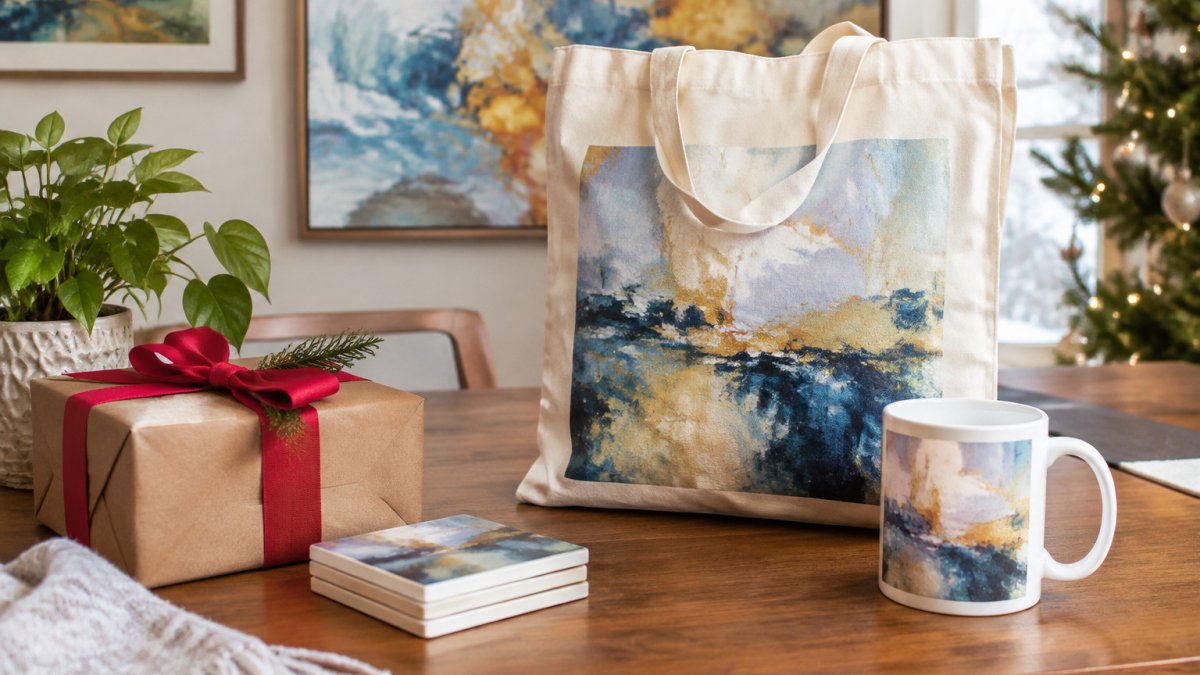
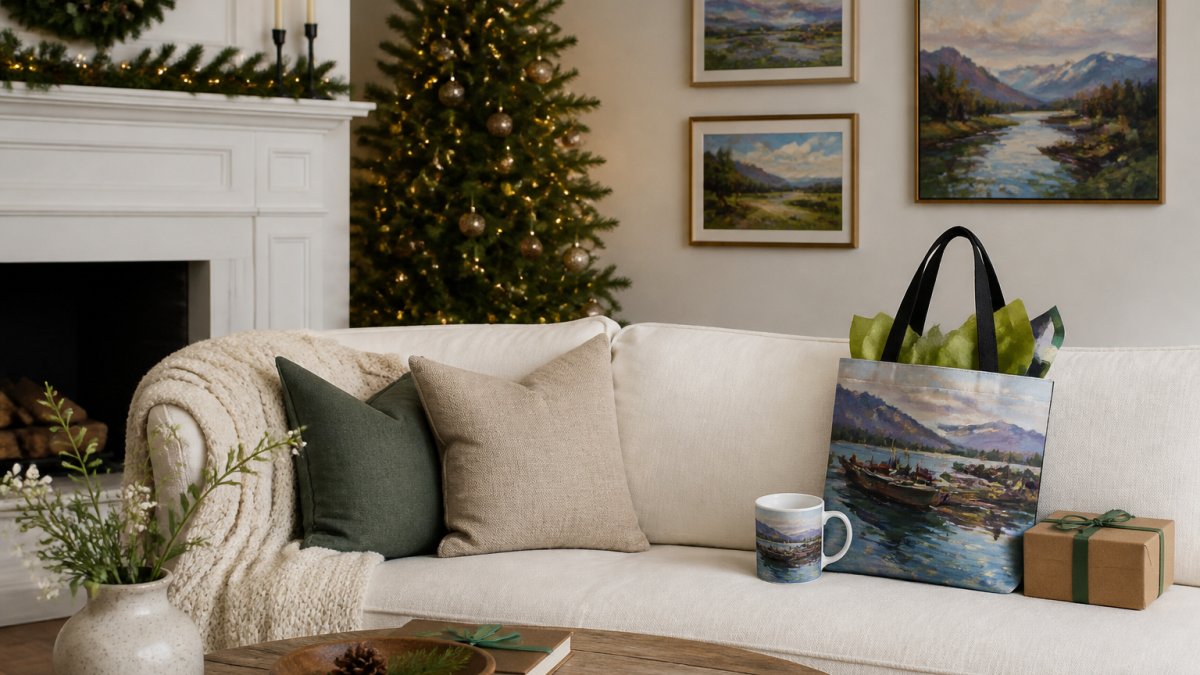
Beyond traditional prints, fine art extends to merchandise. Tote bags, coffee mugs, puzzles, and other items printed with artwork let you live with art in unexpected ways. A favorite landscape on a daily-use mug brings joy every morning. A fine art tote bag makes a thoughtful, unique gift. Puzzles featuring beautiful artwork combine entertainment with appreciation for the art itself.
Merchandise offers several advantages. It's genuinely affordable, making it perfect for holiday gift-giving or treating yourself. It's functional, you actually use these items daily. It lets you test whether you love a piece before committing to a larger, more expensive print or original. And it introduces fine art into your home in low-pressure ways.
The key to budget-friendly collecting is intentionality. Choose pieces you genuinely love rather than filling space. Quality matters more than quantity.
Many collectors start with merchandise, then gradually invest in larger pieces and originals as their taste develops and their budget allows. This approach builds a collection that evolves with you rather than feeling static or forced.
Building a living room art collection is a personal journey. Start with what draws you emotionally, then let your space guide the rest. Lux Landscape Art offers a curated selection of merchandise featuring original landscapes, town life scenes, and abstract work by artist Ginger Lux. Sign Up to explore our collection and receive exclusive discounts on your first order.
Frequently Asked Questions
What is the best art to put in my living room?
The best art for your living room reflects your personal style while complementing your existing decor. Choose merchandise that draws you in emotionally, whether that's bold and eclectic, warm and earthy, or minimalist. Consider your room's color palette and lighting when selecting merchandise to ensure they enhance rather than clash with your surroundings.
How do I choose the right size art for a living room wall?
Measure your wall space and aim for merchandise that fills 50-75% of the wall area above furniture. For a sofa, select items that span about two-thirds to three-quarters of the sofa's width. Large merchandise creates a statement, while smaller pieces work in grouped arrangements. Consider the room's proportions, larger living rooms benefit from bigger merchandise, while smaller spaces suit medium-sized merchandise or grouped arrangements.
Can I preview artwork on my wall before buying it?
Yes, many galleries now offer augmented reality technology that lets you visualize how merchandise will look in your actual space using your smartphone. This tool shows you how merchandise will appear on your walls, helping you confirm sizing, color, and placement before purchasing. Using AR to preview merchandise reduces the risk of disappointment and ensures your selection works with your living room's lighting and decor.
What makes original fine art different from prints and reproductions?
Merchandise provides access to beautiful artwork for living rooms, making it ideal for budget-conscious collectors and holiday gift-giving.