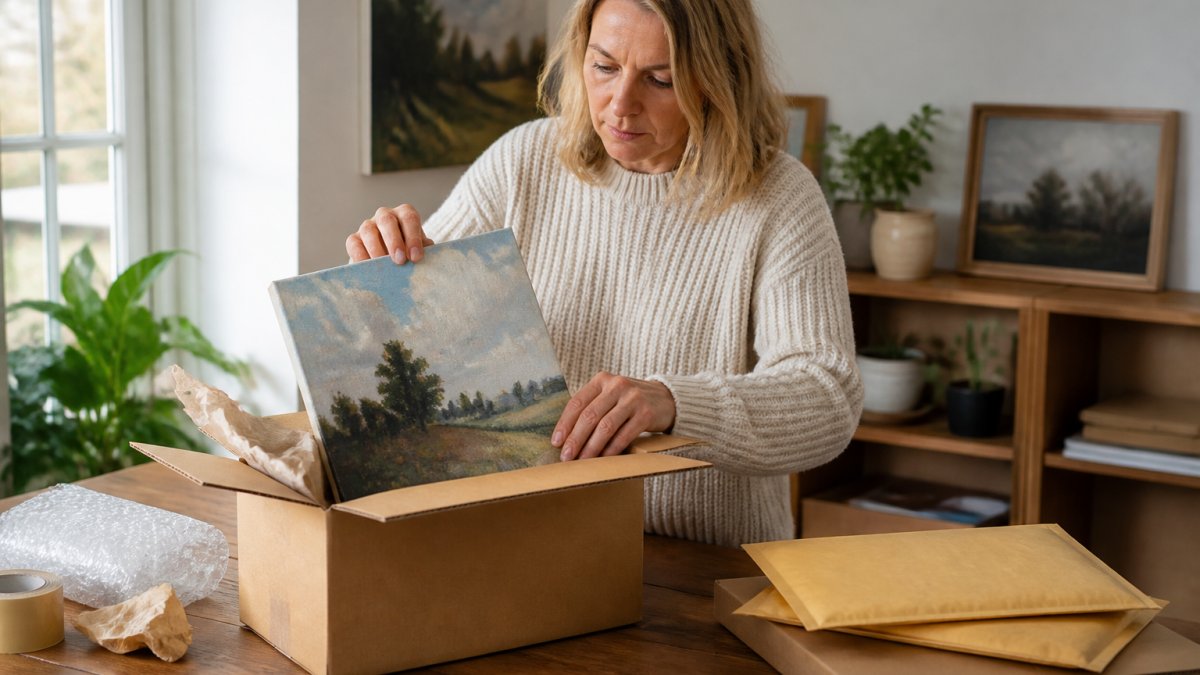
 how-to
How to Return Art Purchased Online: A Step-by-Step Guide
Table of Contents
- Understanding the Online Art Return Policy Before You Buy
- Step 1: Check Your Return Eligibility and Return Window
- Step 2: Contact the Seller to Request a Return
- Step 3: Obtain Return Authorization and Documentation
- How to Package Artwork Safely for Return
- What to Do If Artwork Arrives Damaged
- Arranging Return Shipping and Understanding Costs
- Refunds, Exchanges, and Store Credit
- Frequently Asked Questions
Last Updated: October 17, 2026
Understanding the Online Art Return Policy Before You Buy
Before you return art purchased online, you need to understand the seller's return policy.
Rules vary: some sellers accept returns within 30 days, others have stricter windows, and some offer only store credit or exchanges.
Check it before you buy, not after the artwork arrives, look for a "Returns," "Shipping & Returns," or "Policies" link on the seller's site.
At Lux Landscape Art, we make returns straightforward, so you can feel confident buying art online, whether it's a fine art print on a mug or a tote bag featuring Ginger Lux's landscapes.
Key things to look for in a return policy:
- Return window (how many days you have to request a return)
- Condition requirements (must the item be unused or unopened?)
- What qualifies for a refund versus an exchange
- Who pays for return shipping
- Whether refunds include original shipping costs
Step 1: Check Your Return Eligibility and Return Window
The first step in returning art purchased online is confirming you're within the return window. Most sellers allow returns between 14 and 60 days from your purchase date.
Find your order confirmation email for the purchase date and count forward to confirm you're still within the window; if unsure, check your inbox or the seller's order history.
Most sellers require the artwork to be in unused, sellable condition. For prints on merchandise like mugs or tote bags, that typically means unopened and free of damage.
Check whether the seller accepts returns for all items or only certain ones, some exclude custom orders, made-to-order pieces, or clearance items.
Write down your purchase date and return deadline before you contact the seller.
Step 2: Contact the Seller to Request a Return
Once you've confirmed eligibility, reach out to the seller. Most have a contact form on their website or a customer service email address.
Be clear and professional: include your order number, purchase date, and a brief reason, arrived damaged, color looks different than expected, or simply not satisfied.
Expect a response within 2 to 5 business days; the seller may ask for photos before approving. Keep copies of all emails in case of a dispute or payment claim.
Art Return Request Email Template
Here's a template you can use when contacting the seller:
Subject: Return Request for Order [Your Order Number]
Hello,
I purchased a [item type: print on mug, tote bag, etc.] from your gallery on [purchase date]. My order number is [order number].
I would like to request a return for the following reason: [Select one: arrived damaged / colors look different in person / not satisfied with the piece / other reason].
[If applicable: I have attached photos of the damage/issue.]
Please let me know what steps I need to take to proceed with the return. I'm happy to provide any additional information you need.
Thank you, [Your Name] [Your Order Number]
Step 3: Obtain Return Authorization and Documentation
After the seller approves your return, they'll send you a return authorization or instructions. This might include:
- A return shipping address
- A return authorization number or code
- Instructions on how to package the artwork
- Whether they'll provide a shipping label or if you need to arrange shipping yourself
Save this email for packing and shipping. Some sellers provide a prepaid label; others ask you to pay upfront and request reimbursement after they receive the item.
Photograph the artwork, packing materials, and shipping label before you ship, this protects you if the package is lost or damaged in transit.
How to Package Artwork Safely for Return
Proper packaging protects your artwork during return shipment. Damaged items may not qualify for refunds.
Start with clean, dry hands. Inspect the artwork for any new damage before packing.
For prints on merchandise (mugs, tote bags, puzzles):
- Place the item in its original packaging if available
- Wrap it in bubble wrap or soft cloth
- Use a small box with padding on all sides
- Fill empty space with packing peanuts or crumpled paper
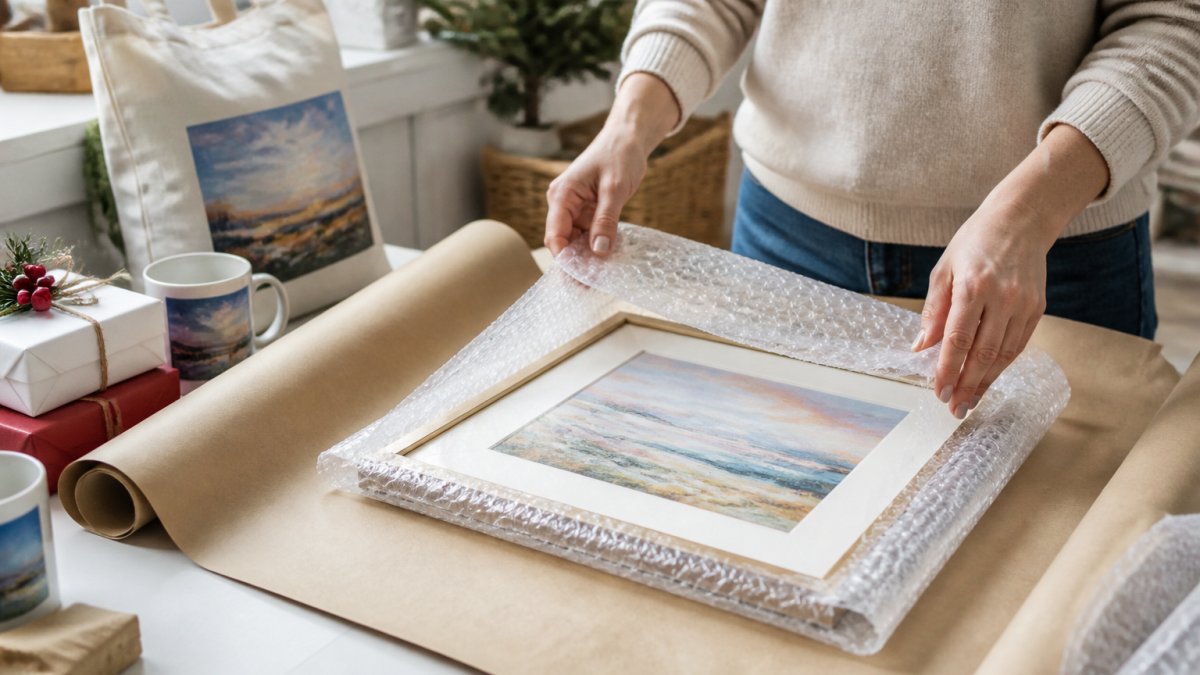
Label the box clearly with the return address and authorization number in permanent marker, and photograph the packed box, label, and tracking info before sealing it.
What to Do If Artwork Arrives Damaged
Damage claims are won or lost on documentation. Buyers who get fast replacements open the box on camera, photograph everything before moving it, and send one organized message with images attached.
The first ten minutes. Before you discard any packaging:
- Photograph the outer box before opening. All sides, the shipping label, and any visible crush, puncture, or water damage. If the box looks compromised, photograph it on the doorstep before bringing it inside.
- Open on video if the piece is valuable. A continuous phone video from sealed box to revealed artwork is the strongest evidence you can produce. It defeats any argument that the damage happened after delivery.
- Photograph the packing materials in place. Show how the item was cushioned (or not). This matters because carriers deny claims for improper packaging, and sellers sometimes blame the buyer's repacking.
- Photograph the damage itself from multiple angles, plus a close-up and a wider shot showing the damage in context of the whole piece.
- Keep everything. Do not throw away the box, the packing materials, or the damaged item until the claim is resolved. Carriers and sellers may ask for them.
Contact the seller within 24 to 48 hours. Most policies set a short damage-report window, often 48 hours from delivery, sometimes 24, and missing it can void your claim. Send one message with:
- Order number and delivery date
- A one-line description of the damage
- All photos and the video attached or linked
- A clear ask: replacement, refund, or return authorization
If the seller stalls or refuses. Escalate in this order: send a written final notice with a deadline (say, seven days) restating the remedy you want; open a case with the marketplace if you bought through one, since platform deadlines can be shorter than expected; then file a payment dispute with your card issuer or PayPal, describing the item as damaged or not as described and attaching your documentation folder.
What 'damaged' covers. Cosmetic issues count: a cracked frame, chipped mug rim, creased print, or scuffed tote. Be precise, 'the frame's lower-left corner is cracked and the glass is chipped' beats 'it's damaged.' For a fine art print on a mug or tote, photograph the print area specifically, since that's what the seller will inspect.
Most sellers resolve genuine damage claims quickly when the evidence is unambiguous, the documentation folder turns a dispute into a replacement.
Arranging Return Shipping and Understanding Costs
Return shipping is where most online art returns go sideways, buyers ship uninsured, un-tracked, or on the wrong account and discover the loss falls on them.
Who pays. Check your return authorization email first. Sellers typically fall into three patterns: a prepaid label (confirm it's insured and its declared value); buyer pays upfront and the seller reimburses after inspection (keep the receipt); or buyer pays with no reimbursement, common for change-of-mind returns.
Who owns the risk. Once you hand a package to a carrier, transit risk generally sits with whoever arranged and paid for the shipment, unless the seller's policy says otherwise:
- If the seller provided the label, the seller is usually the shipper of record and bears transit risk. Ask them to confirm in writing.
- If you arranged the shipment, you are the shipper. If the box is lost or crushed, your remedy is against the carrier, which is why declared value and insurance matter.
Declared value vs. insurance. Declared value sets the claim ceiling; insurance is the coverage you buy against it.
Choosing a carrier and service level. Compare on three axes, not just price: tracking (non-negotiable, a return without it can be claimed never to have arrived); signature on delivery for higher-value pieces; and transit time versus your return window.
If the package is lost or damaged in transit. File the carrier claim promptly (most windows run 30 to 90 days from ship date), notify the seller in writing, and ask them to hold the refund decision pending the claim. If the seller provided the label, ask them to file as shipper of record; if you shipped it, you file. Keep every receipt, tracking screenshot, and photo.
Once the seller receives and inspects the return, refunds typically process within 5 to 10 business days. If the item is lost and the seller is unresponsive, a payment provider dispute is your backstop.
Refunds, Exchanges, and Store Credit
How you get your money back depends on the seller's policy and your original payment method.
Ask which options are available before you approve the return, then choose what works best for you.
Track your refund status on the seller's website or via customer service, and follow up if it doesn't arrive within the promised timeframe. If the seller won't process your return after a reasonable time, contact your payment provider, credit card companies and PayPal offer buyer protection.
Returning art purchased online doesn't have to be stressful. Know the policy upfront, document everything, and communicate clearly, most issues resolve quickly when both sides work together.
When you shop at Lux Landscape Art, we handle returns fairly and promptly. Our fine art prints on tote bags, mugs, and other merchandise are backed by a straightforward return policy, and if you don't love your purchase, we make it easy to make it right.
Frequently Asked Questions
Can I return art purchased online if I change my mind?
Most online art sellers allow returns within a specific return window, often 30 days from purchase date, though this varies by seller. Prints on merchandise like mugs or totes typically have straightforward return policies. Check the seller's return policy before completing your purchase, and contact customer service immediately if you want to return an item. Many sellers accept returns for unused merchandise in sellable condition, but some may charge a restocking fee or require you to cover return shipping costs.
What should I include in an art return request email?
Include your order confirmation number, purchase date, the name and description of the artwork, your reason for the return, and photographic evidence if applicable. Keep your message clear and professional, and ask the seller for their return authorization process and any specific documentation they require. Mention whether you're requesting a full refund, exchange, or store credit. Save a copy of all correspondence with the seller for your records, as this documentation protects you if a dispute arises.
What should I do if my artwork arrives damaged?
Document the damage immediately with clear photographs showing the packaging and the damaged artwork from multiple angles. Contact the seller's customer service right away with your order number and photos as proof. Most sellers will either send a replacement or issue a refund once they've reviewed your damage claim. If the damage occurred during shipping, you may also file a claim with the carrier, especially if you purchased shipping insurance. Keep all original packaging and protective materials until the claim is resolved.
Who pays for return shipping when I return art purchased online?
Return shipping costs depend on the seller's policy and your reason for the return. If you're returning the item because it arrived damaged or doesn't match the product description, most sellers cover return shipping. If you're returning it because you changed your mind, the seller may require you to pay for return shipping or deduct the cost from your refund. Check the return policy and confirm shipping responsibility with the seller before sending the artwork back. Consider purchasing shipping insurance if you're returning a high-value piece.