 comparison
Is Investing in Emerging Artists a Good Idea?
Table of Contents
- Is Investing in Emerging Artists Actually Worth It?
- Emerging Artist Art Investment Risks You Should Know
- How to Evaluate an Emerging Artist Before You Buy
- Art Investment for Beginners: Building Your Collection
- Emerging vs. Established Artists: What's the Real Difference?
- Can Emerging Artist Work Actually Appreciate in Value?
- A Practical Decision Framework for Your First Purchase
- Frequently Asked Questions
Last Updated: October 8, 2026
Is Investing in Emerging Artists Actually Worth It?
Whether investing in emerging artists makes sense depends on your goals and risk tolerance. Some buy purely for enjoyment, with no thought of resale. Others hope the artist's career takes off and the work appreciates. Both are valid, but they require different strategies.
At Lux Landscape Art, we work with collectors across this spectrum. The honest answer: investing in emerging artists can be worthwhile, but it carries real risks and requires homework.
Most guides miss this: emerging art isn't comparable to stocks or bonds. There's no liquid secondary market, and resale is slower, harder, and more expensive than people expect. Understand those mechanics upfront and you can build a collection that brings joy and has genuine potential to appreciate.
Below, we break down the real risks, how to evaluate an artist, and a practical framework for deciding whether emerging art is right for you.
Emerging Artist Art Investment Risks You Should Know
Investing in emerging artists carries risks that don't apply to established work or conventional assets. Understanding them helps you avoid overpaying for hype.
Market illiquidity is the biggest risk. Buying from an emerging artist is a bet that someone will want it later. There's no centralized marketplace for instant sales, so you'll likely work through a gallery, auction house, or online platform, each taking a commission.
Survivorship bias works against you. We hear about artists who were "discovered" and skyrocketed. We don't hear about the thousands whose careers plateau or fade.
Authenticity and provenance matter more than you'd think. Original work needs clear documentation of origin, creator, and condition, since forged or misattributed work has zero resale value. For art-printed merchandise like totes or mugs, the artist's reputation and printing quality still affect durability and appeal.
Career trajectory is unpredictable. An artist might have momentum one year and vanish the next. Representation changes, recognition is subjective, and demand shifts. None of it is in your control, and all of it affects whether your purchase holds value.
The bottom line: treat emerging art as a long-term holding with no guaranteed exit. If you can't afford to keep a piece for years without selling it, don't buy it as an investment.
How to Evaluate an Emerging Artist Before You Buy
Before buying from an emerging artist, assess systematically whether they're worth your money. These are the key factors.
Gallery Representation and Exhibition History
Gallery representation is one of the strongest signals of legitimacy. An artist shown by reputable galleries has passed a curation filter, since owners stake their reputation on who they show.
Ask how long the gallery has represented the artist, whether they show in multiple galleries, and the gallery's reputation. An artist at a respected regional gallery is generally a better bet than one with none.
Exhibition history matters too. Solo shows are a bigger deal than group shows, signaling the gallery believes in the artist's marketability. Juried competitions, art fairs, and museum exhibitions take years to build and signal serious commitment.
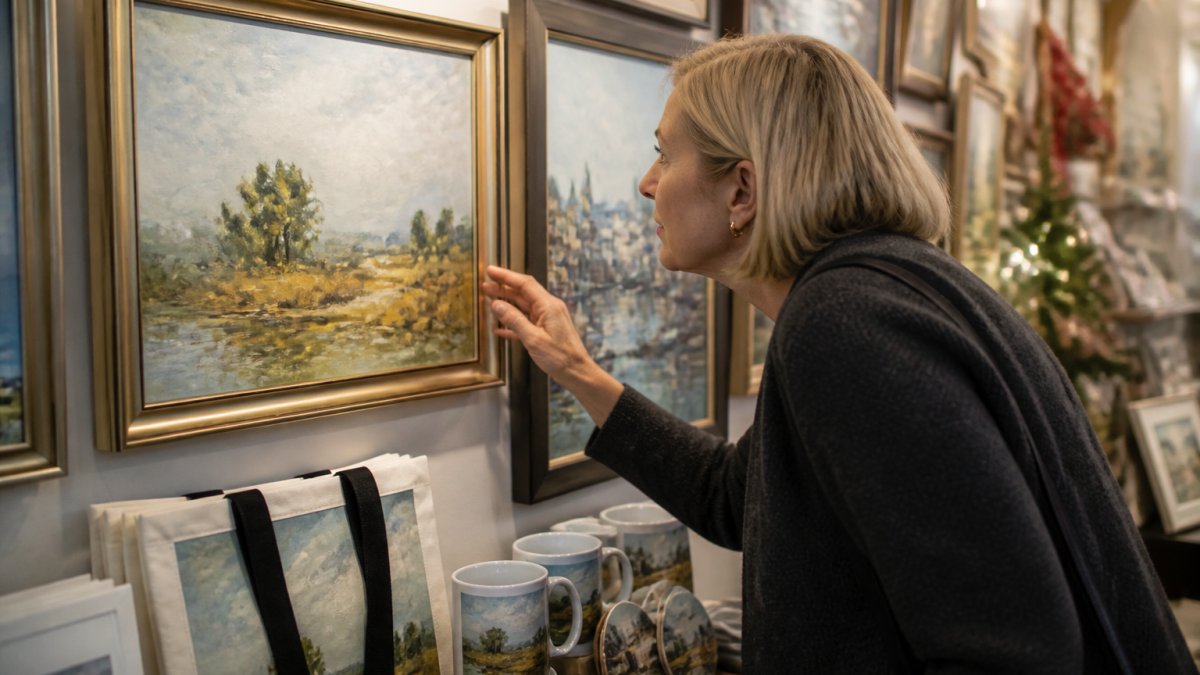
Be skeptical of artists with no exhibition history or only an online presence. They may be talented, but they haven't been vetted by traditional gatekeepers.
Career Trajectory and Critical Recognition
Career trajectory shows whether an artist is building momentum or stalling. When did they first show? Have they exhibited consistently over 3-5 years, or sporadically? Consistency signals dedication and growing recognition.
Critical recognition is harder to quantify but worth investigating. Search art magazines, blogs, and local media for the artist's name. Have critics written about them? Have respected curators included them in shows? These endorsements carry weight.
Watch for rapid hype without substance. A sudden burst of attention that fades is different from steady recognition built over years, which is more reliable.
Provenance, Authenticity, and Condition
For original artwork, provenance, the documented ownership history, is essential. Know where the work came from, who owned it, and how it's been cared for. Buying from the artist or a gallery is straightforward; on the secondary market, ask for documentation.
Authenticity matters because forged or misattributed work is worthless. The risk is lower for emerging artists, but still ask for a certificate of authenticity or a signed artist statement.
Condition affects enjoyment and resale value. Look for damage, fading, or poor storage, and examine original paintings in person where possible, since photos hide flaws. For art-printed merchandise from Lux Landscape Art, printing quality and material durability determine how well it holds up.
Art Investment for Beginners: Building Your Collection
If you're new to art investing, start small and focus on learning rather than big financial bets.
Portfolio Sizing and Loss Tolerance
How much of your portfolio should go to emerging art? Most advisors suggest a small portion of a diversified portfolio, typically 5% or less for serious collectors and even less for beginners, because art is illiquid and unpredictable.
Before buying, ask: Can I hold this piece 5+ years without selling? Am I comfortable if it never appreciates? If either answer is no, you're not ready.
Start with smaller purchases, art-printed merchandise like totes, mugs, or limited prints are excellent entry points. They're more affordable, they serve a practical purpose, and you can enjoy them daily while you learn how the market works. This lets you test your taste and build confidence without major financial risk.
Transaction Costs and Resale Mechanics
Here's what most guides gloss over: selling art is expensive. When you eventually want to sell a piece, you'll typically work through a gallery (which takes 40-50% commission), an auction house (which charges both buyer's and seller's fees), or an online platform (which takes 10-20% commission). Some pieces are difficult to sell at any price.
Let's say you buy an original painting for what feels like a fair price. Five years later, you want to sell it. Even if the artist has become more established, you might only recoup your original investment after paying commissions and fees. For the piece to be a financial win, the artist's work would need to appreciate significantly, enough to cover those transaction costs plus generate actual profit.
This is why buying art you genuinely love is so important. If the financial return never materializes, you still have something you enjoy looking at. If you're purely chasing appreciation, you're taking on substantial risk with uncertain upside.
Emerging vs. Established Artists: What's the Real Difference?
The difference between buying emerging and established artists comes down to risk, cost, and liquidity.
Established artists have proven track records. Their work has appreciated over time, they have consistent gallery representation, their pieces sell on the secondary market, and there's historical pricing data you can reference. The downside: established art costs significantly more. You're paying for proven value, which means less potential for explosive appreciation.
Emerging artists offer the opposite trade-off. Their work is cheaper, so you can buy more pieces or take bigger risks. There's genuine potential for appreciation if their career takes off. But you're also taking on real uncertainty. Many emerging artists never achieve the recognition or market demand that would drive value appreciation.
The comparison with conventional investments is worth making explicit: emerging art typically underperforms stocks over long time horizons. The average emerging artist's work appreciates slowly, if at all. But some pieces do appreciate significantly, and those wins can be substantial. You're essentially betting on discovering the next generation of blue-chip artists, which is exciting but risky.
Can Emerging Artist Work Actually Appreciate in Value?
Yes, emerging artist work can appreciate. But the timeline and magnitude matter.
Appreciation typically happens slowly. An emerging artist might see their work appreciate 5-15% annually over a 10-year period if their career gains traction. That's respectable but not extraordinary. Some pieces appreciate much faster if the artist gets major recognition or museum acquisition. Some never appreciate at all.
The pieces that do appreciate most dramatically are usually those that:
- Sold early in the artist's career at relatively low prices
- Come from artists who later achieved significant critical recognition
- Were created during a pivotal period in the artist's development
- Have strong exhibition and provenance history
The challenge is identifying which emerging artists will achieve this trajectory before they do. That's where research, gut instinct, and a bit of luck come in.
One practical reality: art-printed merchandise appreciates differently than original work. A tote bag or mug from an emerging artist's collection is more about the joy of owning something you love than financial appreciation. These items are affordable, accessible, and perfect for supporting artists you believe in without major financial risk.
A Practical Decision Framework for Your First Purchase
Use this framework to decide whether a specific emerging artist is worth buying from:
Step 1: Does the work move you emotionally? If the answer is no, don't buy it. You need to genuinely love what you're purchasing, because financial appreciation is uncertain.
Step 2: Research the artist's credentials. Check their exhibition history, gallery representation, critical recognition, and career timeline. Spend 30-60 minutes on this. If they have minimal credentials, proceed with caution.
Step 3: Assess your loss tolerance. Can you afford to own this piece for 5+ years without selling it? If not, this isn't the right purchase for you right now.
Step 4: Evaluate the asking price. Compare it to other work by similar emerging artists. Is it reasonable? Are you paying for hype or for genuine value?
Step 5: Consider format and scale. Are you buying original work, a limited edition print, or art-printed merchandise? Each has different resale mechanics and appreciation potential.
Step 6: Make the purchase. If you've passed all five steps and you genuinely want to own the work, buy it. Don't overthink it.
| Decision Factor | What to Look For | Red Flag |
|---|---|---|
| Artist Credentials | 3+ years exhibition history, gallery representation | No gallery representation, sporadic shows |
| Career Momentum | Consistent presence in galleries, growing recognition | Sudden hype followed by silence, no recent shows |
| Pricing | Comparable to similar emerging artists, reasonable for market | Unusually high or aggressively marketed |
| Your Motivation | Genuine emotional connection to the work | Purely financial motivation, pressure to buy |
| Format | Original, limited print, or merchandise you'll enjoy | Unclear provenance, questionable authenticity |
Investing in emerging artists isn't for everyone. It requires patience, research, and a genuine love of art.
At Lux Landscape Art, we believe the best art investment starts with finding work that speaks to you.
Frequently Asked Questions
Is investing in emerging artists a good idea for beginners?
Investing in emerging artists can work for beginners if you approach it as a long-term commitment with money you can afford to lose. Start small, research the artist's career trajectory and gallery representation, and focus on work you genuinely enjoy. Many collectors find emerging art offers affordability and personal connection that blue-chip art doesn't. However, resale is unpredictable, there's no guarantee an artist's work will appreciate. Treat your first purchases as learning experiences, not financial bets.
What are the main risks when investing in emerging artists?
The biggest emerging artist art investment risks include: artist career stagnation (many talented artists never gain wider recognition), liquidity challenges (selling original work takes time and effort), market saturation (oversupply of similar work), and survivorship bias (you only hear about successful artists, not the thousands who fade). Additionally, valuations are subjective, there's no standardized pricing. Authentication and provenance issues can affect resale value. Finally, transaction costs and gallery commissions eat into any potential gains.
How do you evaluate an emerging artist before buying their work?
When evaluating an emerging artist, examine their gallery representation (are they shown in legitimate galleries?), exhibition history (how many shows, which venues?), and critical recognition (reviews, press mentions, artist statements). Research their career trajectory, are they progressing or plateauing? Check provenance and authenticity documentation. Look at pricing consistency and whether their work appears in multiple markets. Follow their social media and artist statements to understand their vision. Finally, assess the artwork itself: condition, originality, and whether it resonates with you personally, not just as an investment.
What should I expect to pay in transaction costs when buying emerging art?
Transaction costs vary significantly. Direct-from-artist purchases typically have lower markups than gallery sales, but galleries provide curation and authentication. Shipping, insurance, and framing can add to your total cost. On resale, you may incur gallery commissions, auction fees, and shipping expenses. Before buying, ask the seller or gallery exactly what fees apply. Understanding these costs upfront helps you assess whether potential appreciation justifies the expense.