 how-to
Buying Original Art on a Budget: A 2026 Guide
Table of Contents
- Defining Your Personal Art Taste and Budget
- How to Start an Art Collection for Beginners
- Understanding Original Artwork vs. Prints and Reproductions
- Finding Affordable Original Art From Emerging Artists
- Using Augmented Reality to Preview Art in Your Space
- Unique Art-Inspired Gift Ideas for Holiday Shopping
- Verifying Authenticity and Hidden Costs of Art Ownership
- Frequently Asked Questions
Last Updated: October 3, 2026
Defining Your Personal Art Taste and Budget
The first step in buying original art on a budget is understanding what you actually want, not jumping straight to shopping and ending up with pieces that don't fit your space or taste.
Gather inspiration by walking through your home, browsing design blogs and galleries, and saving images that resonate with you. After a few weeks, patterns will emerge, you might prefer landscapes over abstracts, or warm tones over cool ones.
Once you know your taste, set a realistic budget. Think about how much you're willing to spend on individual pieces versus building a collection over time. Many collectors start with smaller works and add gradually, learning what they genuinely love without overcommitting financially.
How to Start an Art Collection for Beginners
Starting an art collection requires intention and patience. Begin with one piece that genuinely speaks to you rather than buying multiple works at once.
Research emerging artists whose work aligns with your taste. Many price their work more affordably than established names. Read their artist statements to understand their vision.
When you find a piece you're considering, live with the image for a few days and imagine it in your space. If it still feels right, that's a good sign.
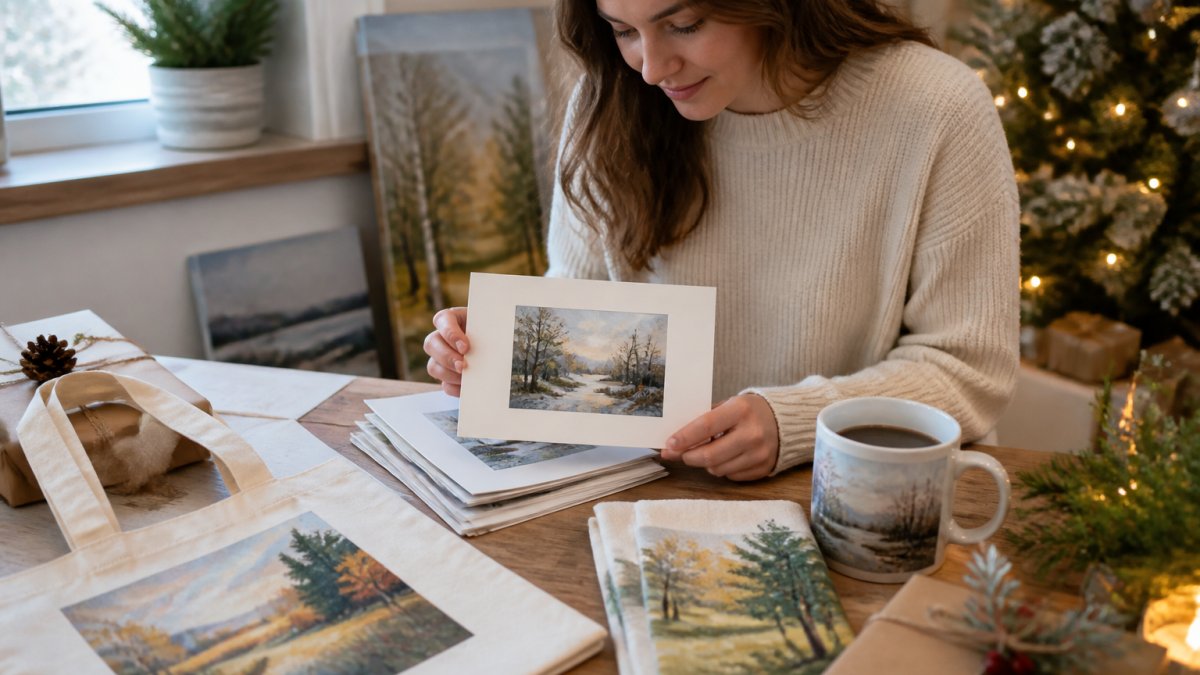
Consider starting with smaller formats or prints on merchandise like tote bags and mugs. These items let you live with an artist's work affordably while you develop your collecting eye.
Understanding Original Artwork vs. Prints and Reproductions
Original artwork is a one-of-a-kind or limited-edition piece created directly by the artist. Prints and reproductions are copies produced in multiple editions. This distinction matters for both your wallet and satisfaction.
Original pieces command higher prices and hold potential investment value.
When you buy an original, you own the artist's direct creation. With prints, you own a reproduction.
Merchandise items like tote bags and coffee mugs printed with fine art designs offer another accessible entry point. These items combine affordability with quality design.
Finding Affordable Original Art From Emerging Artists
Emerging artists are your best source for affordable original work. Understanding how artist pricing works helps you maximize your budget.
Why direct-from-studio costs less:
Buying directly from an artist's website or studio eliminates the gallery markup, typically 40-50% of retail price.
How to evaluate fair pricing for emerging artists:
Artist pricing depends on medium, size, experience level, and market conditions. Ask the artist to explain their pricing structure.
Compare pricing across similar artists.
Questions to ask emerging artists:
- How long have you been creating and selling your work?
- What materials do you use, and why did you choose them?
- How many hours does a piece like this typically take?
- Do you offer payment plans or discounts for multiple purchases?
- Can you provide a certificate of authenticity or artist statement?
- Do you have a waiting list or upcoming releases?
- What's your return or satisfaction policy?
Most emerging artists are transparent about their process and pricing.
Where to find emerging artists:
- Online galleries and marketplaces dedicated to supporting new talent, where you can filter by medium, style, and price range
- Art fairs and pop-up events in your area, where artists often sell directly and you can negotiate face-to-face
- Artist websites and social media, where creators frequently offer direct sales and share their process
- Studio visits and open-studio events, which let you see work in person, ask detailed questions, and sometimes negotiate pricing
- Artist collectives, where groups of emerging creators share space and costs, reducing individual overhead
When buying from emerging artists, you're not just getting affordable work, you're supporting someone building a career.
Using Augmented Reality to Preview Art in Your Space
Augmented reality solves the frustration of buying art online by letting you visualize artwork in your actual space before you commit.
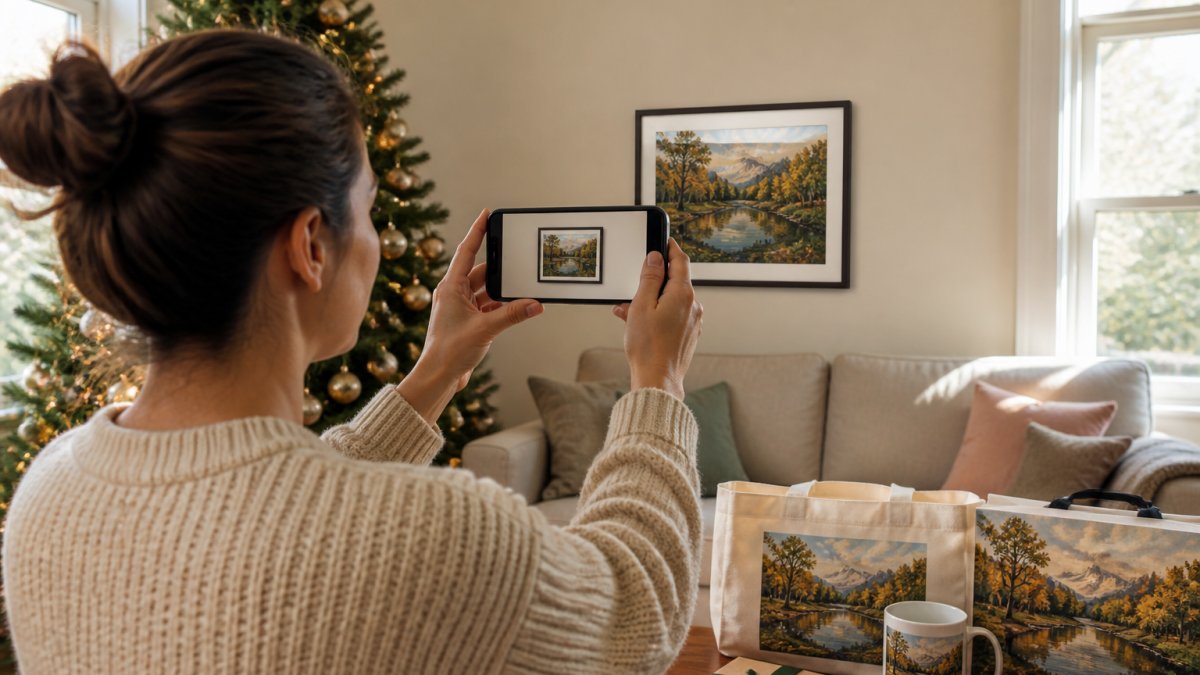
Here's how to use AR for art shopping:
- Find an artwork you're considering
- Open the AR preview tool on the gallery's website or app
- Point your phone at the wall where you'd hang the piece
- Adjust size and position using on-screen controls
- Take screenshots to compare different options
- Share previews with friends or family for feedback
This technology is particularly useful when you're deciding between multiple pieces or uncertain about sizing. You see exactly what you're getting before purchase.
Test AR previews in different lighting conditions to get a realistic sense of how the artwork will look.
Unique Art-Inspired Gift Ideas for Holiday Shopping
Art-inspired merchandise offers thoughtful, affordable holiday gifts that combine aesthetic appeal with everyday utility.
Consider these gift ideas:
- Tote bags featuring original artwork designs, perfect for someone who appreciates carrying art with them
- Coffee mugs printed with fine art, ideal for daily enjoyment and conversation starters
- Puzzles featuring original paintings, combining art appreciation with interactive entertainment
- Coasters and desk accessories that bring artistic flair to workspaces
- Apparel like t-shirts or hoodies featuring artist designs for wearable art
These items cost far less than framed prints or originals and introduce friends and family to artists they might not otherwise discover.
When selecting gifts, choose pieces that match the recipient's home aesthetic and color palette. If you're unsure, neutral designs or landscape themes work with most interiors.
Gift sets combining multiple items, like a mug with a coaster or a tote with a notebook, create substantial packages without the investment of larger pieces.
Verifying Authenticity and Hidden Costs of Art Ownership
Before purchasing, understand what you're buying and what costs come after the sale.
How to verify authenticity:
Authentication depends on the type of work you're buying. For original paintings or drawings, ask the seller for:
- Certificate of authenticity (COA): A document signed by the artist stating the work is original, including creation date, medium, dimensions, and edition number (if applicable).
- Artist signature: Original works should be signed by the artist and match examples on the artist's website.
- Provenance documentation: A record of ownership. The artist should confirm they created it.
- Edition information: Limited-edition prints should state the edition number (e.g., "5 of 50"). Unlimited reproductions should be clearly labeled.
Red flags to watch for:
- Sellers who can't or won't provide a certificate of authenticity
- Vague language like "in the style of" or "after" an artist (these are reproductions, not originals)
- Significantly lower prices than comparable work by the same artist without explanation
- No artist contact information or verifiable online presence
- Pressure to buy quickly without time to research
- Photos that look professionally retouched or don't match the actual piece
Contact the artist directly if you have questions.
Hidden costs of art ownership:
The total cost of owning original art extends far beyond the purchase price. Budget for these expenses:
Framing and mounting: Professional framing for original artwork typically costs $200-800+ depending on quality. Archival framing protects your investment but costs more. Prints and merchandise like tote bags and mugs arrive ready to use without framing costs.
Shipping: Original artwork requires careful packing and often insured shipping.
Insurance: If you're building a serious collection, consider art insurance.
Climate control and storage: Original artwork needs stable temperature and humidity to prevent damage.
Lighting: Displaying art properly requires appropriate lighting.
Maintenance and restoration: Over time, original artwork may need cleaning or minor restoration.
Calculate total cost of ownership:
Working with trusted sellers:
Establish a relationship with a seller who provides transparency on all costs upfront. Look for:
- Clear return or satisfaction policies (typically 14-30 days)
- Detailed shipping and handling information
- Responsive customer service
- Transparent pricing with no surprise fees
- Verified credentials or industry recognition
Trusted sellers provide certificates of authenticity, answer questions about materials and provenance, and stand behind their work.
Frequently Asked Questions
How do I know if an original piece of art is authentic?
Authentic original artwork comes with provenance documentation from the artist or gallery. Look for a certificate of authenticity, artist signature, and clear information about the medium and creation date. Trusted sellers like Lux Landscape Art provide verified artist credentials and transparent details about each piece. Ask the seller directly about the artwork's history and request documentation before purchasing. Be cautious of deals that seem too good to be true or sellers unwilling to provide artist information.
What's the difference between an original painting and a high-quality art print?
Original artwork is a one-of-a-kind or limited-edition piece created directly by the artist, with unique brushstrokes, texture, and character. High-quality art prints are reproductions of original work, often on canvas or paper, using archival-quality materials. Originals typically appreciate in value and offer exclusivity, while prints provide affordable access to artwork you love. Both can enhance your space, prints work well for budget-conscious buyers, while originals appeal to collectors seeking investment-grade pieces.
Can I really trust augmented reality previews to show how art will look in my home?
Modern AR technology is quite accurate for visualizing scale, placement, and general color appearance in your space. However, lighting conditions, screen calibration, and wall texture can affect how colors appear. Use AR as a helpful guide rather than a guarantee. Take photos of your space with good natural lighting, test the preview at different times of day, and compare it against your wall color samples. Most trusted galleries allow returns if the piece doesn't match your expectations once it arrives.
Are there ways to support emerging artists while staying on a budget?
Yes. Emerging artists often price their work more affordably than established names, making original artwork accessible to budget-conscious collectors. Look for studio visits, art fairs, and online galleries featuring new talent. Consider commissioning smaller works or purchasing limited-edition prints of original designs. Many emerging artists also create merchandise like tote bags and mugs printed with their art, these are excellent, affordable ways to own and gift unique pieces while directly supporting the creator.